
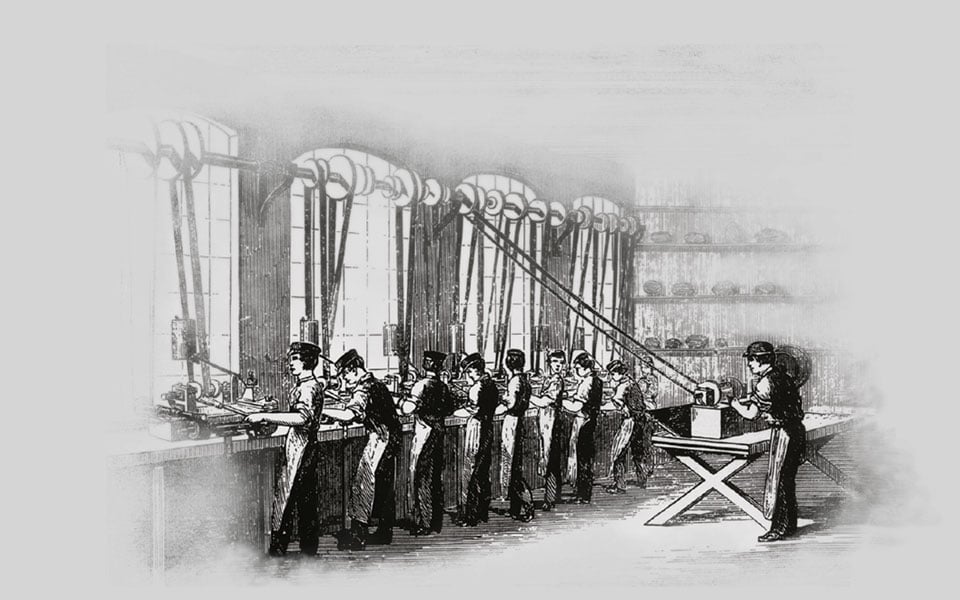
In November 1891, entrepreneurs Bob Walker Smith and Albert Eadie buy George Townsend & Co. of Hunt End, Redditch. Townsend’s is a well-respected needle manufacturer of almost 50 years standing which has recently begun manufacturing bicycles.
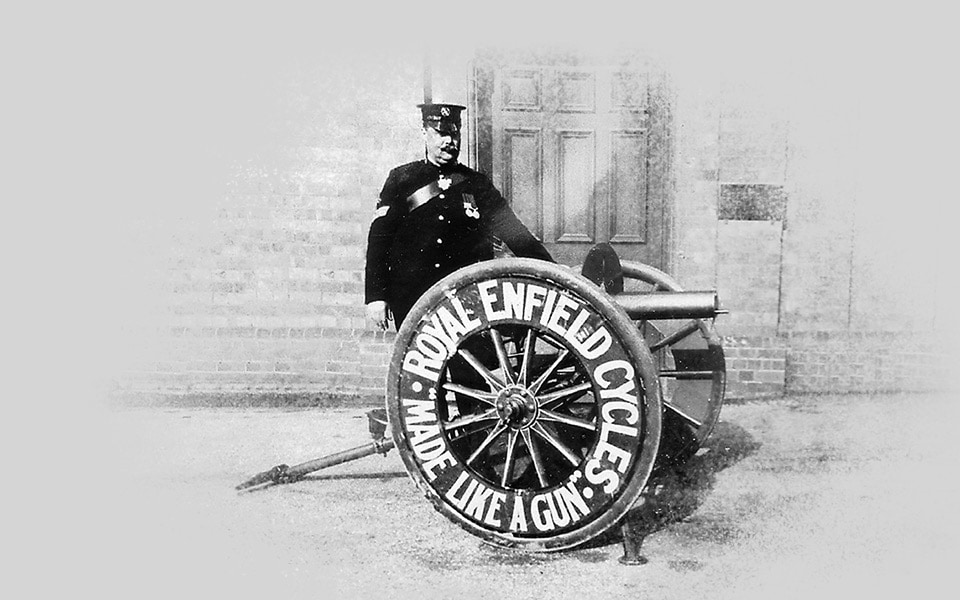
The duo win a contract to supply precision parts to the Royal Small Arms Factory of Enfield, Middlesex. To celebrate this prestigious order, they rename their undertaking the Enfield Manufacturing Company Ltd. and call their first Bob Walker Smith designed bicycle, the Enfield. The following year, their bicycles are renamed Royal Enfields and the trademark ‘Made Like A Gun’ is introduced.
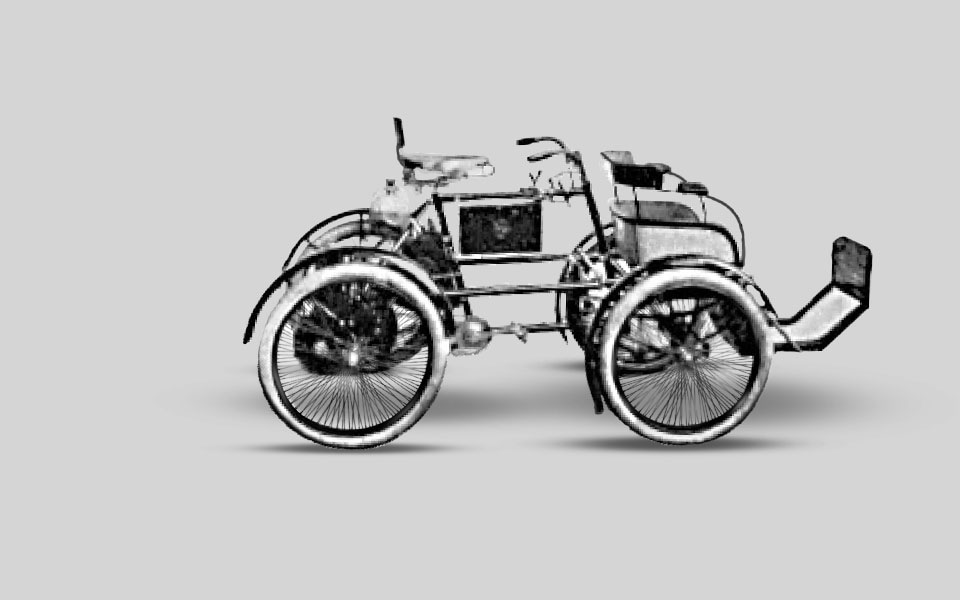
Bob Walker Smith designs the company’s first motorised vehicle. Known as a quadricycle, it uses a proprietary 1 1/2 hp De Dion engine. The company finalises its trading name as The Enfield Cycle Co. Ltd., a name it uses in Britain for the following 70 years.
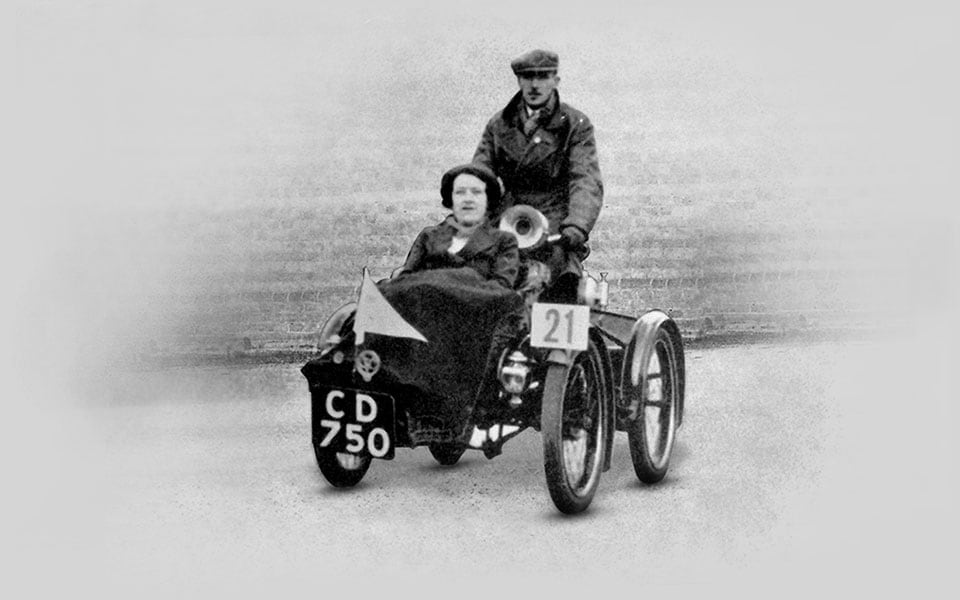
A Royal Enfield quadricycle is awarded a silver medal on completion of the inaugural 1000 Mile Reliability Trial. Following a torturous cross-country route from London to Edinburgh and back, the heavily publicised event does much to convince the British public of the viability of motorised transport.
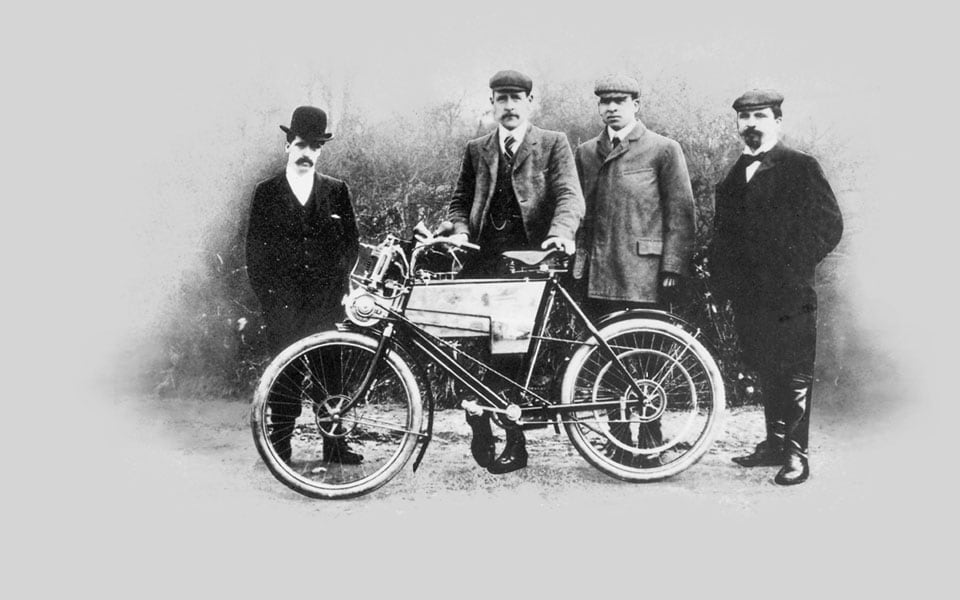
The first Royal Enfield motorcycle is produced. Designed by Bob Walker Smith and Frenchman Jules Gobiet, it is launched at the Stanley Cycle Show in London. The 1 3/4 hp engine is mounted in front of the steering head and the rear wheel driven by a long rawhide belt. It costs £50.
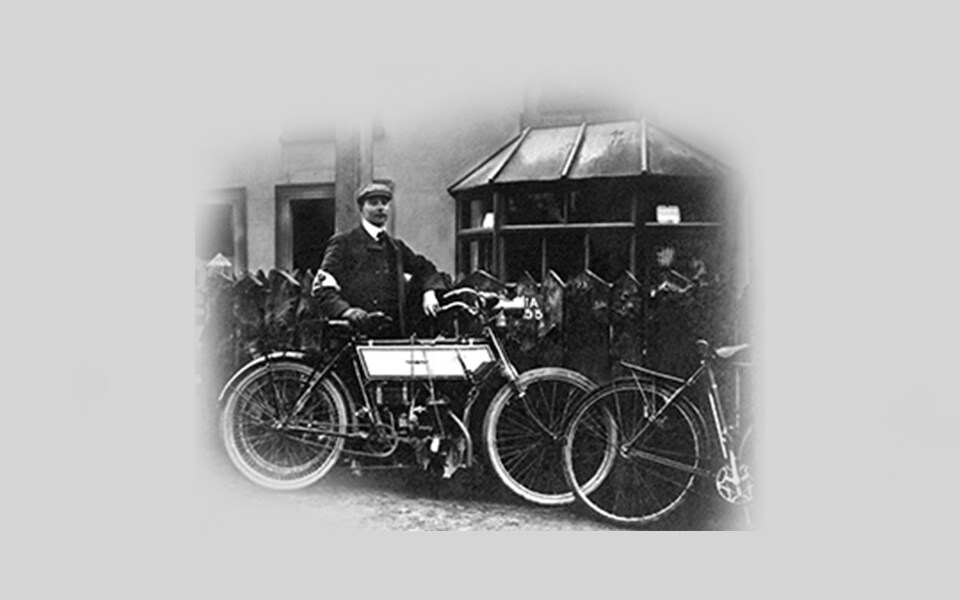
The first documented road race is won by John Paul Burney on a 350cc belt driven Royal Enfield in 1904. Burney crosses the finish line 45 minutes ahead of the second place rider after 200 punishing miles on Ireland's rough roads.
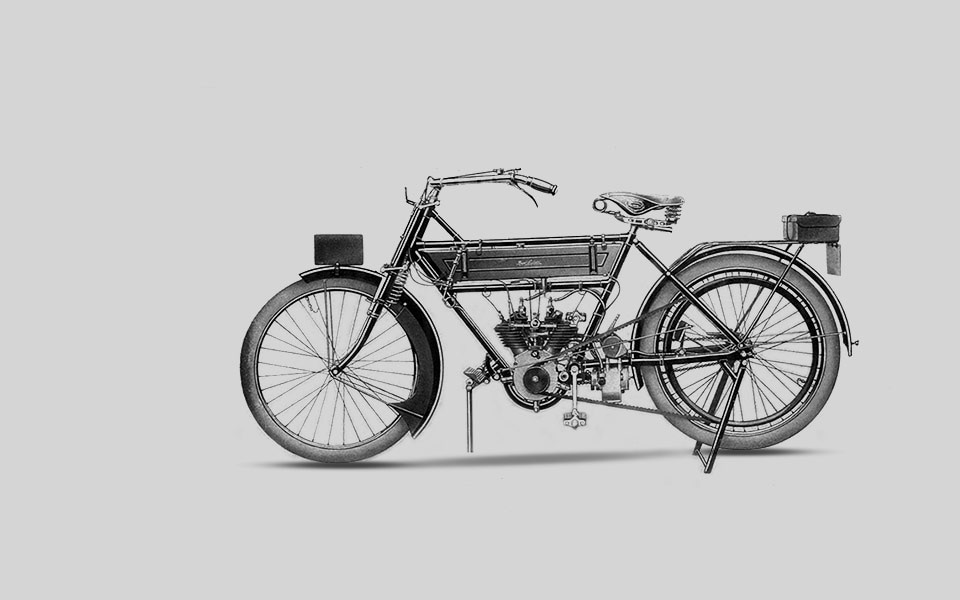
Royal Enfield’s first V-twin, using a 297cc Swiss-made Motosacoche engine, is launched at the Stanley Cycle Show. The model achieves numerous competition successes the following year, including in the John O’ Groats to Lands End Trial.
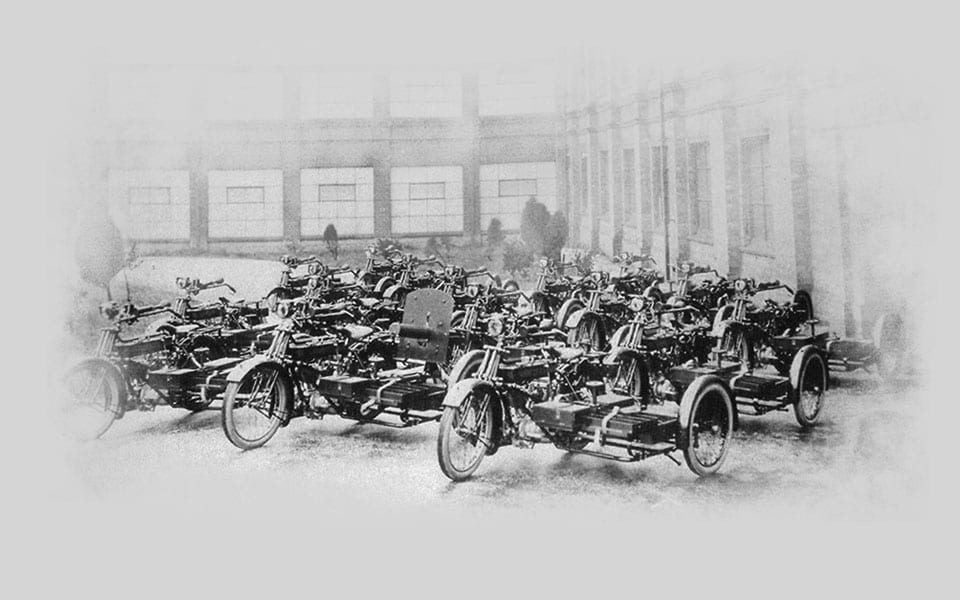
Royal Enfield's first 2-stroke motorcycle goes into full production. As Britain becomes embroiled in World War I, production of the company’s biggest motorcycle, the 770cc 6 hp V-twin, takes precedence. During the conflict, the company supplies motorcycles to the British, Belgian, French, United States and Imperial Russian armies.
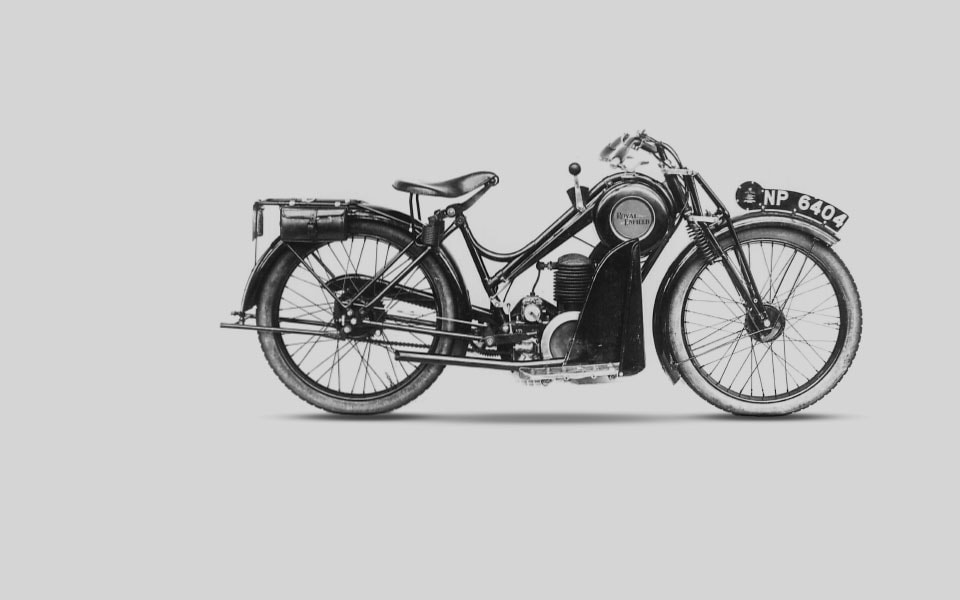
Continuous development results in a range of eight models, including the launch of the Sports Model 351, the first Royal Enfield 350cc OHV 4-stroke motorcycle with foot operated gear change. A unique 225cc 2-stroke step-through 'Ladies Model' is also introduced.
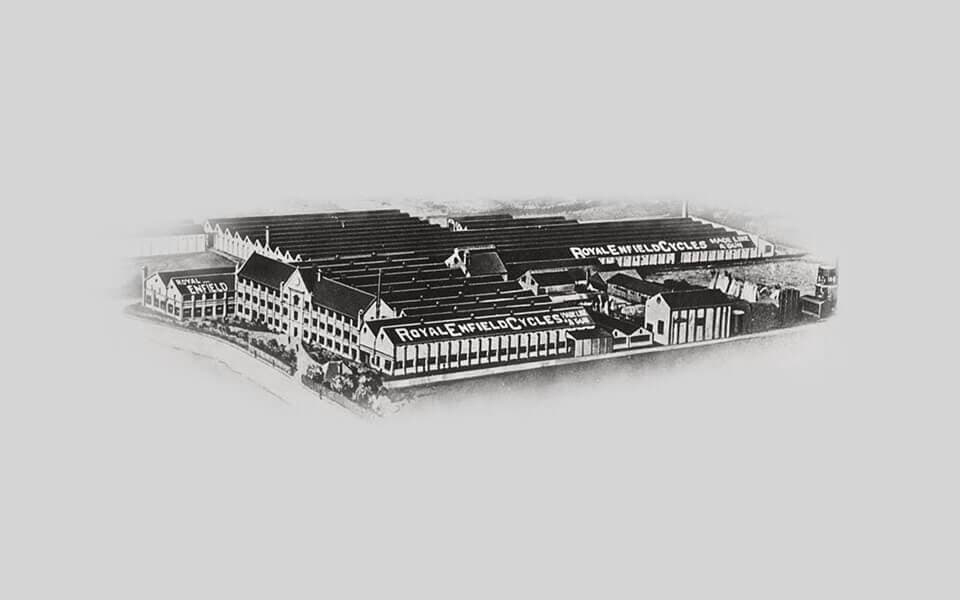
A major fire breaks out at the 18-acre Redditch factory. The company's own fire brigade manages to fight the flames which threaten to engulf the entire plant.
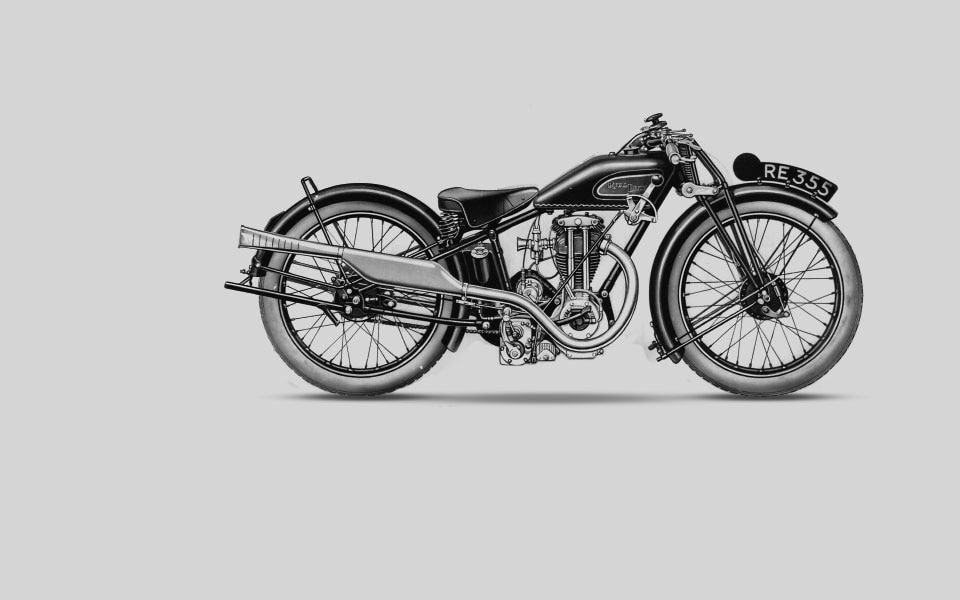
Royal Enfield adopts saddle tanks in place of outmoded flat tanks. It is also one of the first manufacturers to change its front fork system from a Druid design to centre-sprung girder forks.
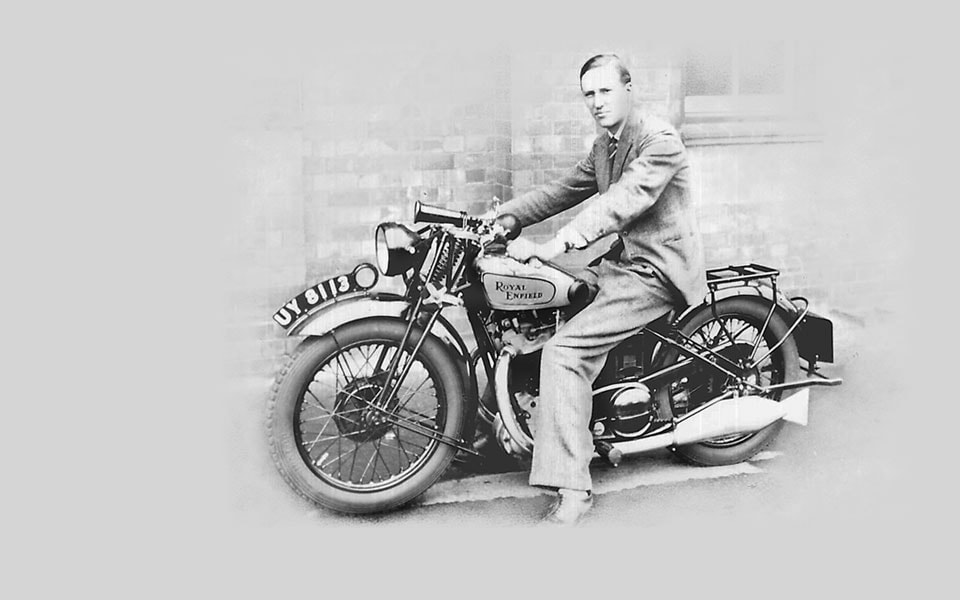
The decade begins with a diverse eleven model range, from the 225cc 2-stroke Model A to the 976cc V-twin Model K. New 350 and 500cc side-valve and overhead valve machines with dry-sump lubrication are also produced.
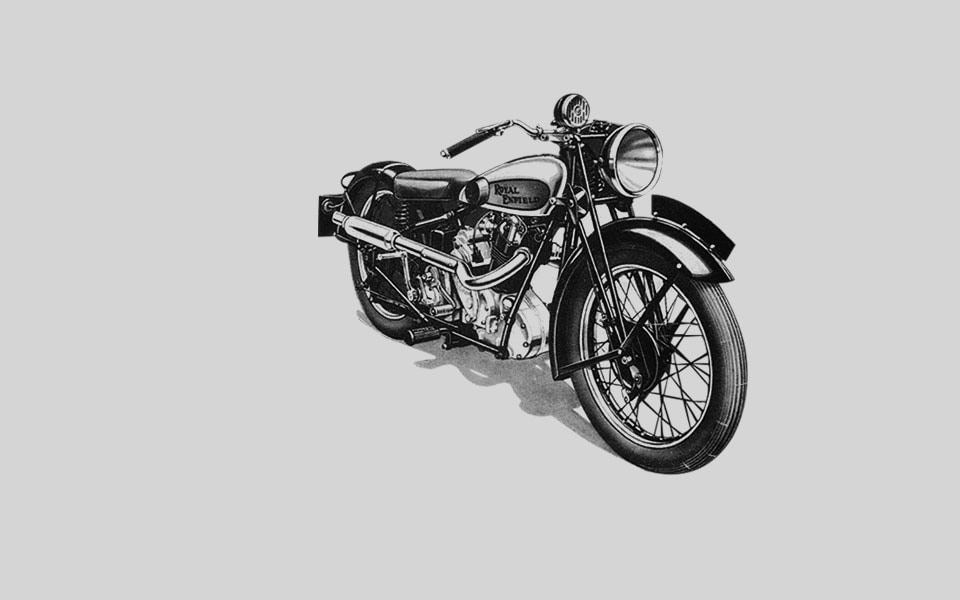
The legendary "Bullet" motorcycle is born. Three versions are produced: 250, 350 and 500cc, all with inclined 'sloper' engines, twin-ported cylinder heads, foot operated gear change and high compression pistons. The 500 Bullet has a sporty 4-valve cylinder head and is capable of 90 mph.
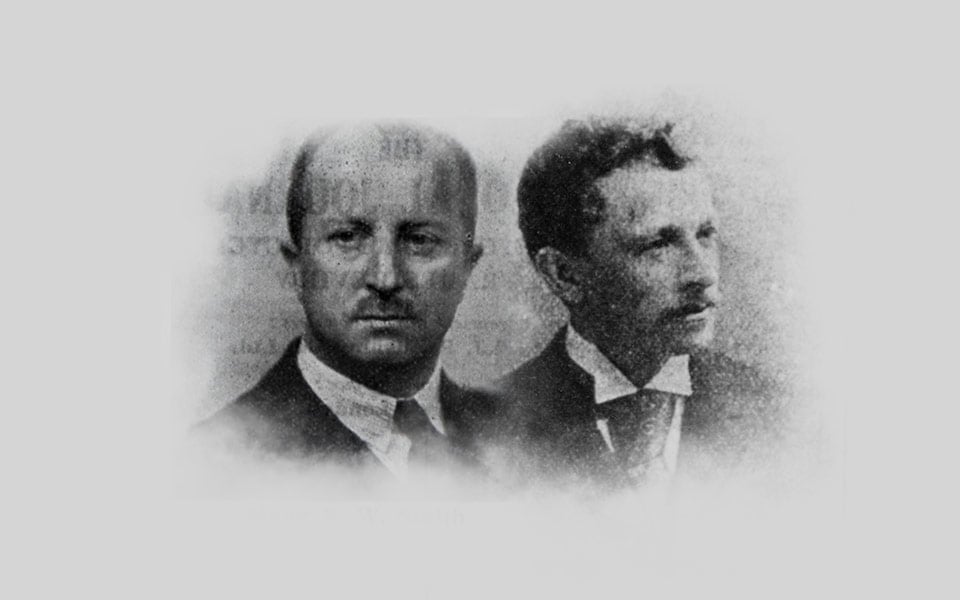
Founding partner and joint Managing Director, Bob Walker Smith, passes away. His son, Major Frank Smith. who has been joint Managing Director with his father for a number of years, assumes full control of The Enfield Cycle Company.
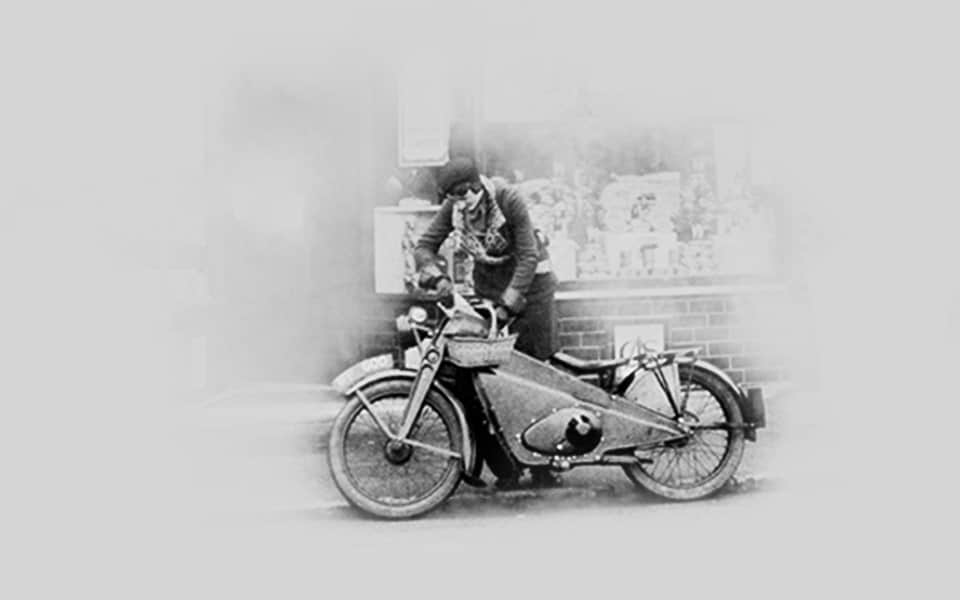
The groundbreaking Model Z 'Cycar' goes on sale. Aimed at commuters, this 148cc 2-stroke features a fully enclosed engine and legshields to protect its rider from the worst of the elements.
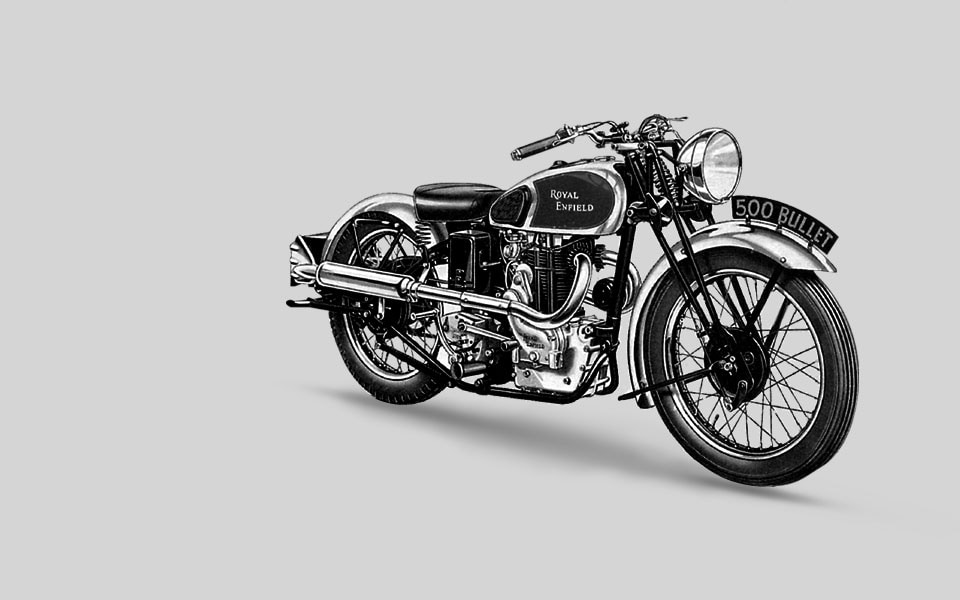
The 500cc Bullet is radically changed with the release of the Model JF. It features an upright engine with a 4-valve cylinder head. A sports version, with a bronze cylinder head, is available to special order.
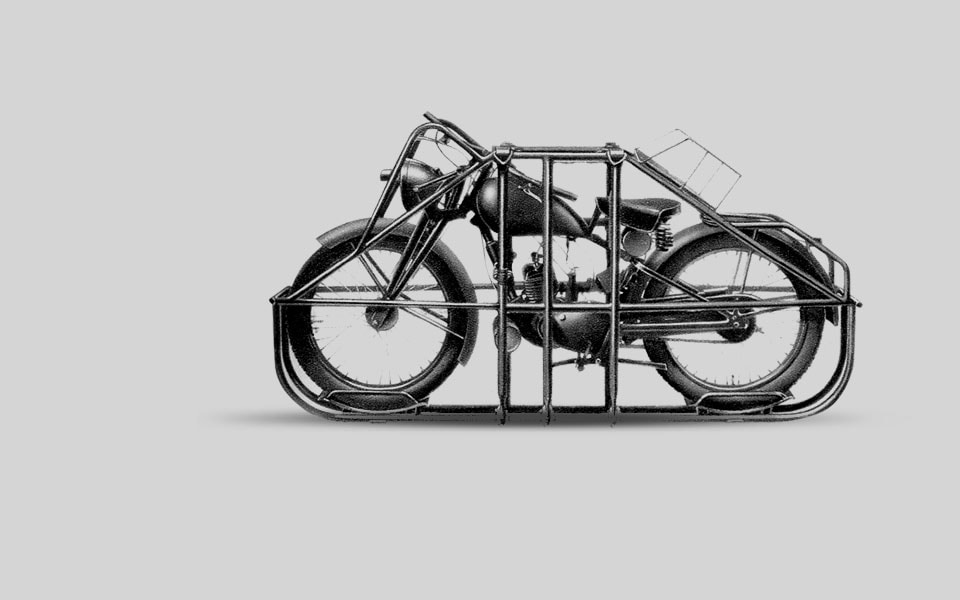
Royal Enfield produces over 55,000 military motorcycles during the Second World War. The most unique model is the 125cc 'Airborne', also known as the Flying Flea. These lightweight 2-stroke machines are loaded into specially fabricated parachute cradles and dropped with paratroops behind enemy lines, most notably ahead of the D-Day landings and during Operation Market Garden, the largest airborne assault in history.
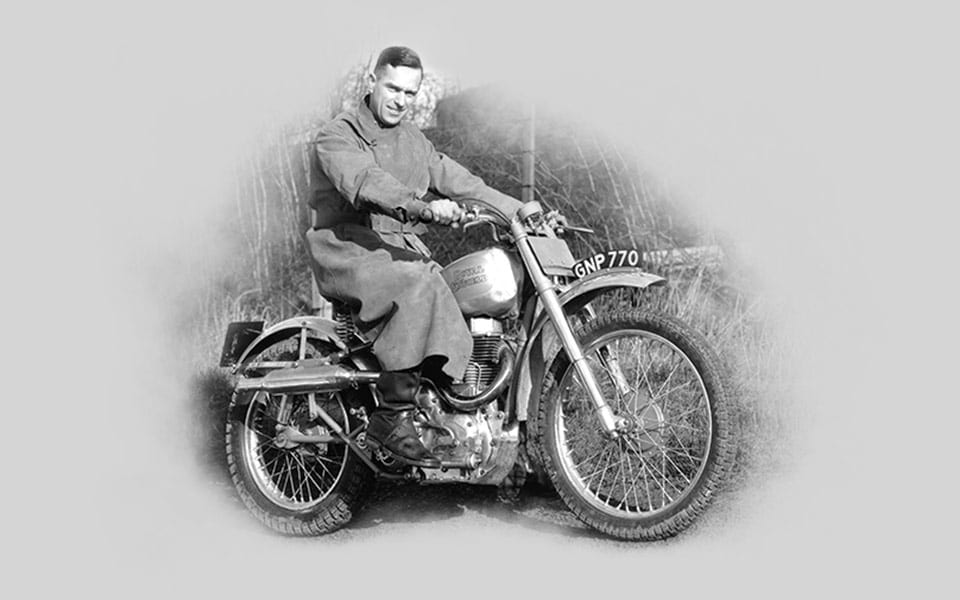
The post-war 350cc Bullet prototype, with radical oil-damped swinging arm rear suspension, is previewed in the Colmore Cup Trial of February 1948. Two Bullets form part of the victorious British Trophy team in the 1948 ISDT (International Six Days Trial), held in Italy. Both their riders win gold medals.
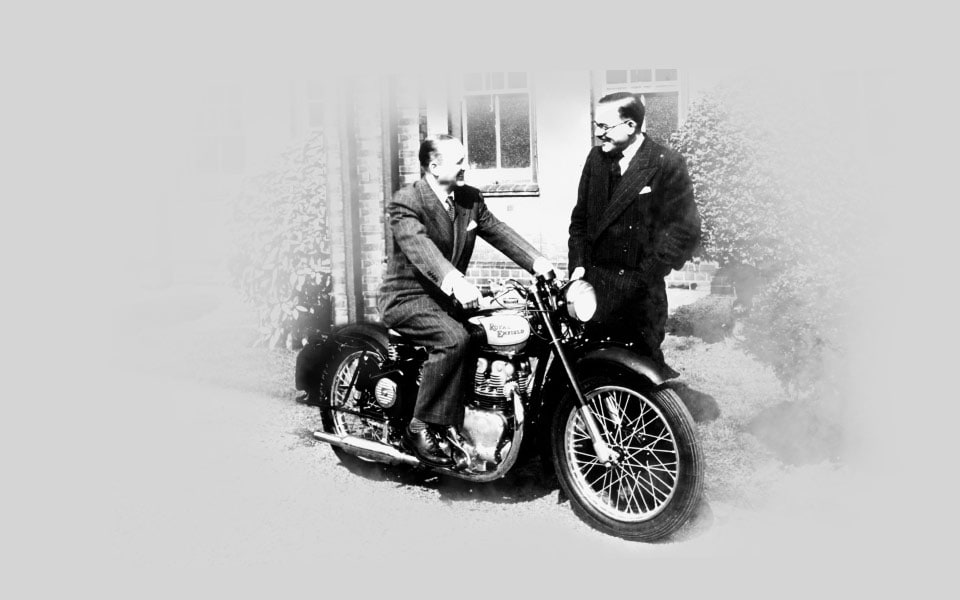
The new 350cc Bullet and 500 Twin models are launched in the UK. Both bikes share the same frame, groundbreaking swinging arm suspension, telescopic front forks and gearbox. K. R. Sundaram Iyer launches Madras Motors to import British motorcycles into India, including Royal Enfields.
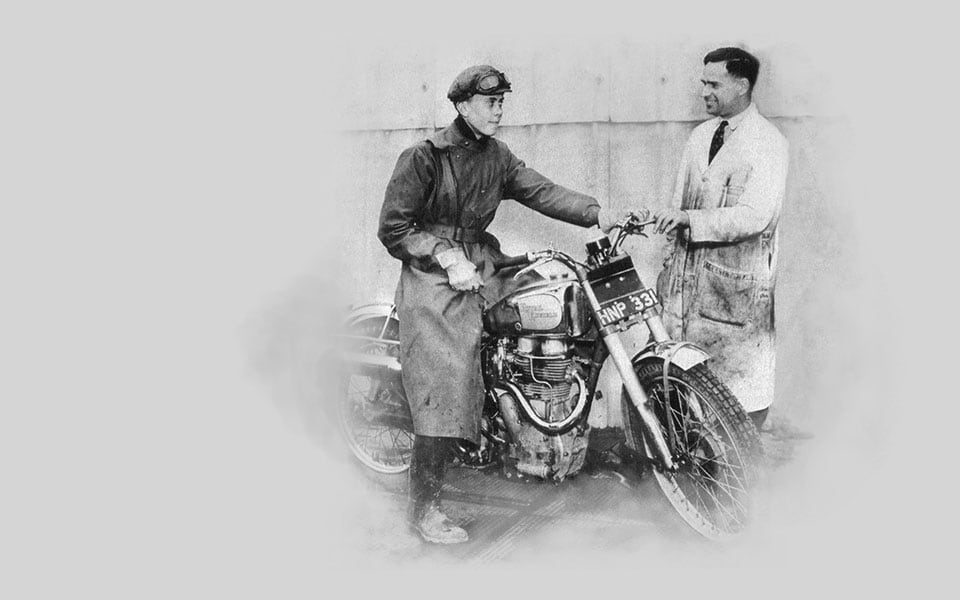
Royal Enfield's star rider, Johnny Brittain, wins the prestigious Scottish Six Days Trial on his 350cc Bullet, HNP 331.
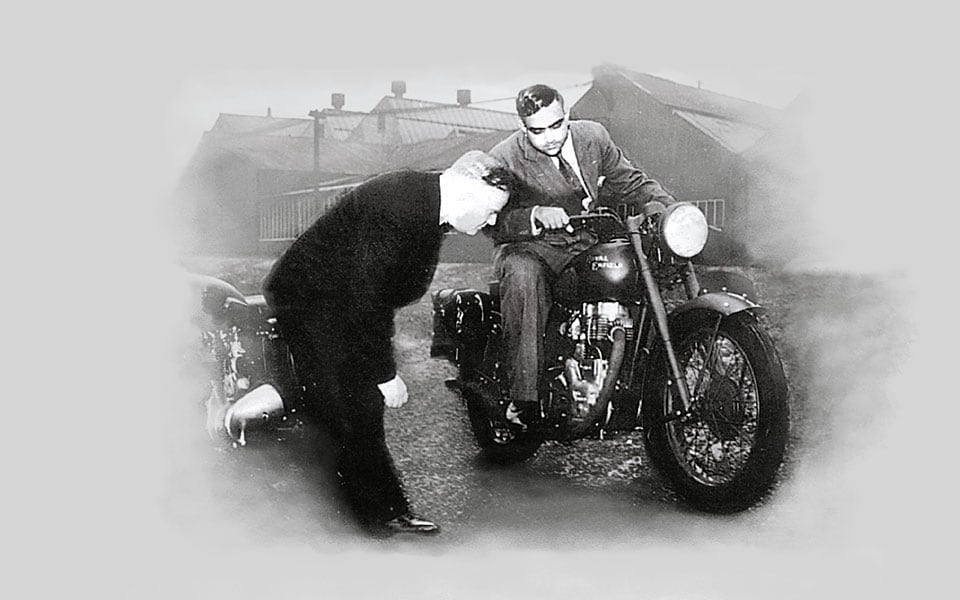
The Indian Army orders 500 350 Bullets to patrol its borders in Kashmir and Rajasthan. The Bullets prove inimitably suitable for the tough terrain, as well as being hardy and easy to maintain. Several more large orders follow.
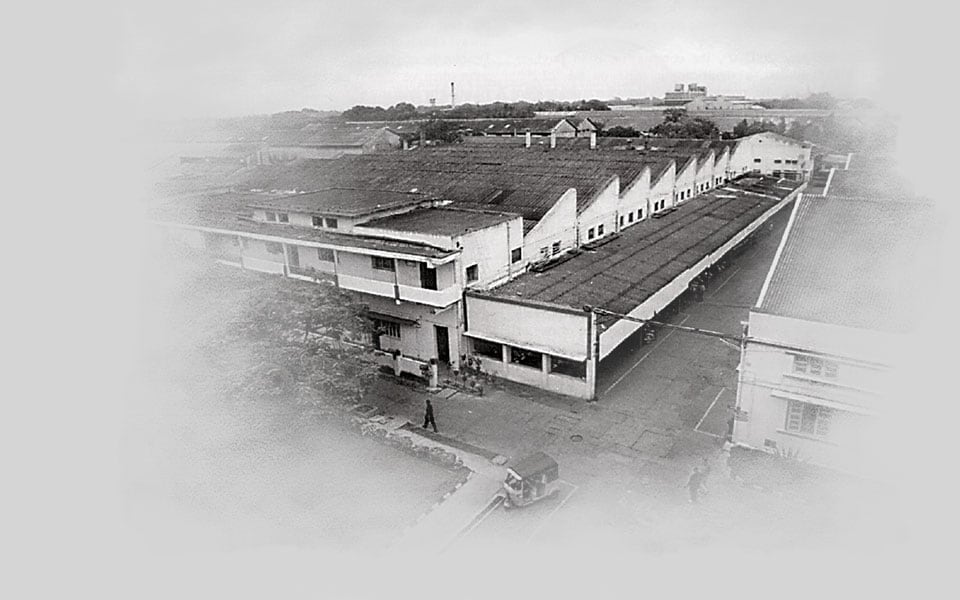
The Redditch company partners Madras Motors in India to form 'Enfield India'. Work commences on the construction of a purpose-built factory at Tiruvottiyur, near Madras.
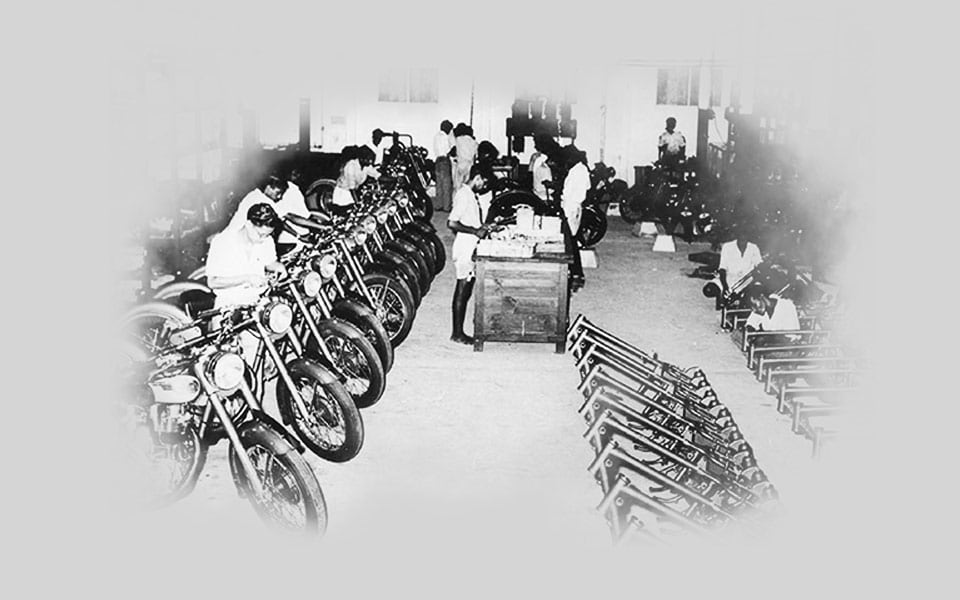
The Tiruvottiyur factory opens and Bullets begin to be manufactured under license. These machines are initially shipped from England in kit form (CKD) then assembled in the Madras plant. Over the following years, the fabrication of components gradually moves to the Madras factory.
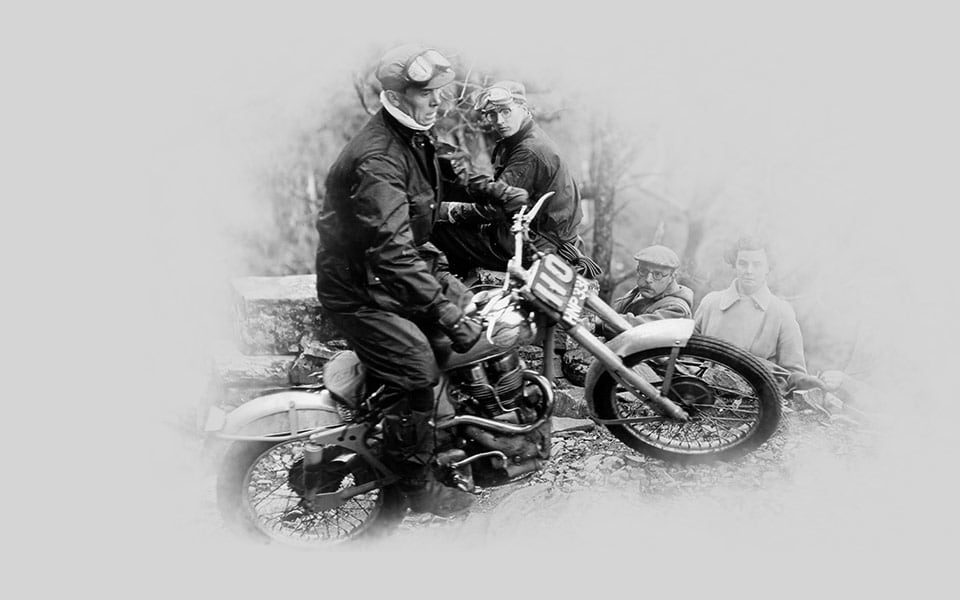
Johnny Brittain wins the Scottish Six Days Trial on a Bullet for the second time and also finishes top of the British trials championship. The 250cc Crusader model is launched in Britain. Producing 13 bhp, the motorcycle features a unit construction engine and alternator electrics with coil ignition.
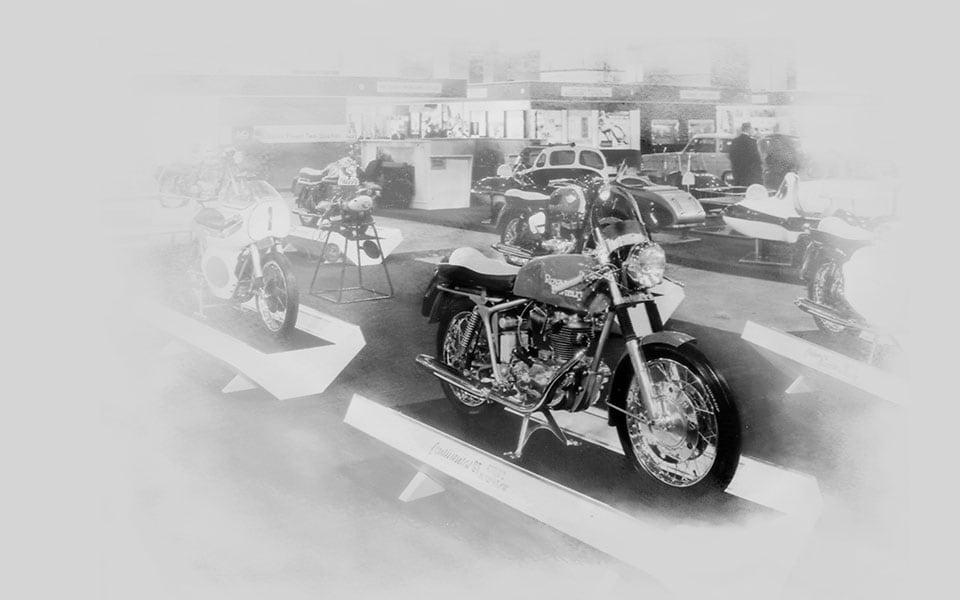
The iconic Continental GT café racer is launched to great acclaim when a team of journalists ride one 1000 miles from John O’ Groats to Lands End in under 24 hours, including 8 laps of the Silverstone circuit. The GT features a fibreglass racing petrol tank, clip-on handlebars, rear sets, a humped race seat, rev counter and a swept-back exhaust.
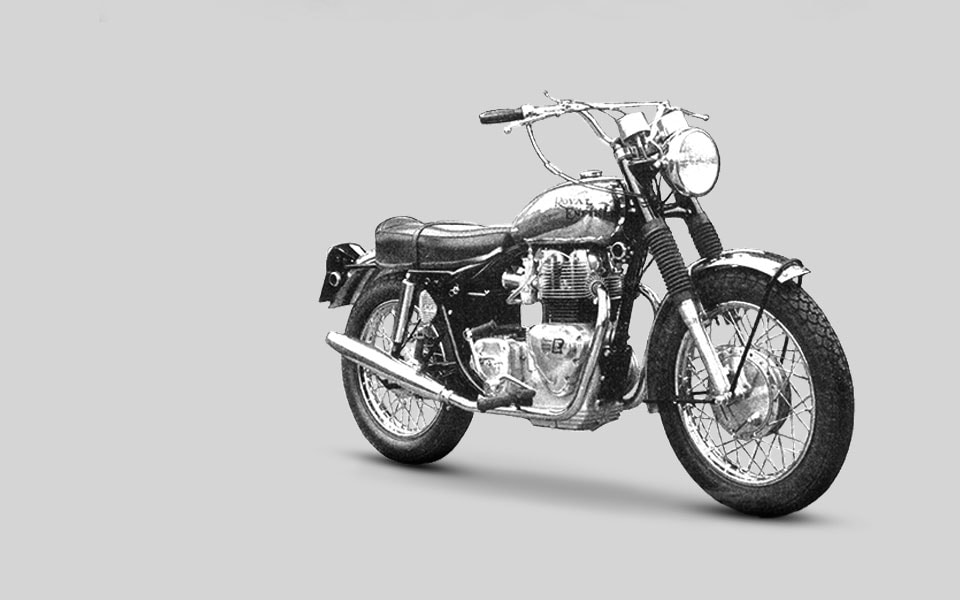
With only two models left in production at the start of the year – the 250cc Continental GT and the 736cc INT – Royal Enfield’s Redditch facility closes and the site sold to developers. Production of the INT continues at Enfield’s underground facility at Upper Westwood, near Bradford on Avon, until its closure in June 1970.
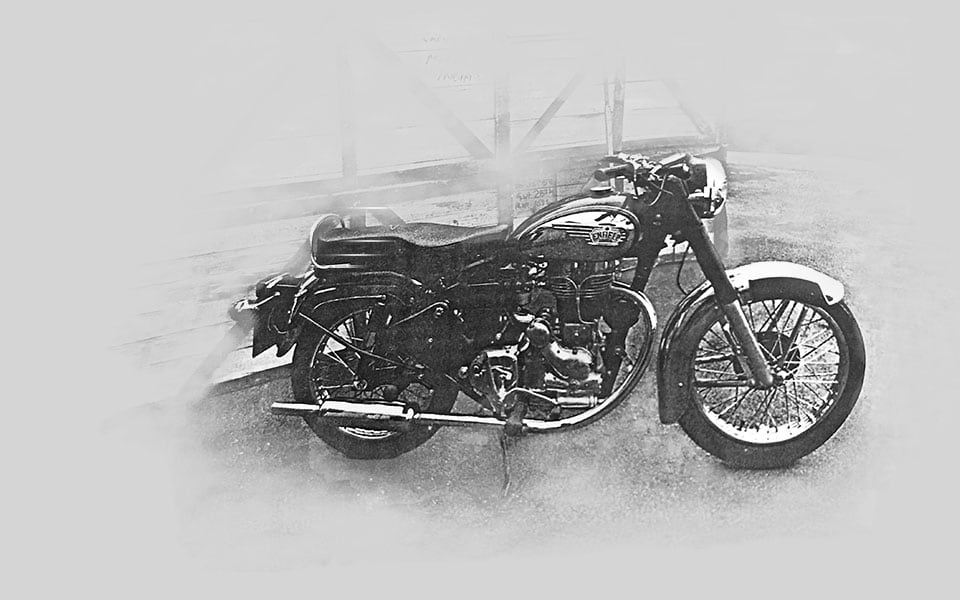
Royal Enfield India begins exporting the 350cc Bullet to the UK and Europe. Sales grow rapidly as the bike develops a loyal following amongst classic motorcycle enthusiasts.
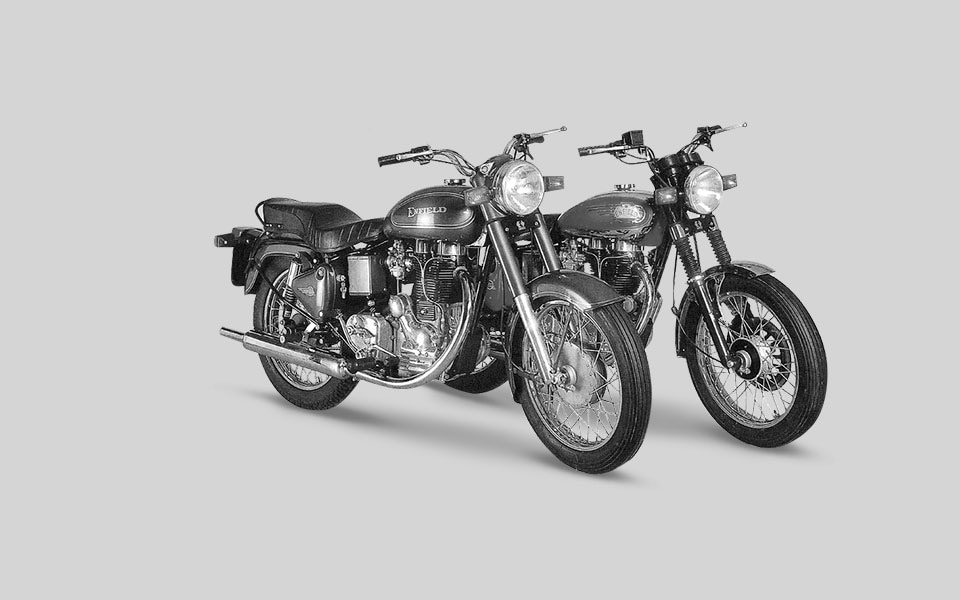
A new 24 bhp 500cc Bullet is released. The bike is primarily aimed at export markets where it is available in Classic, Deluxe and Superstar trim.
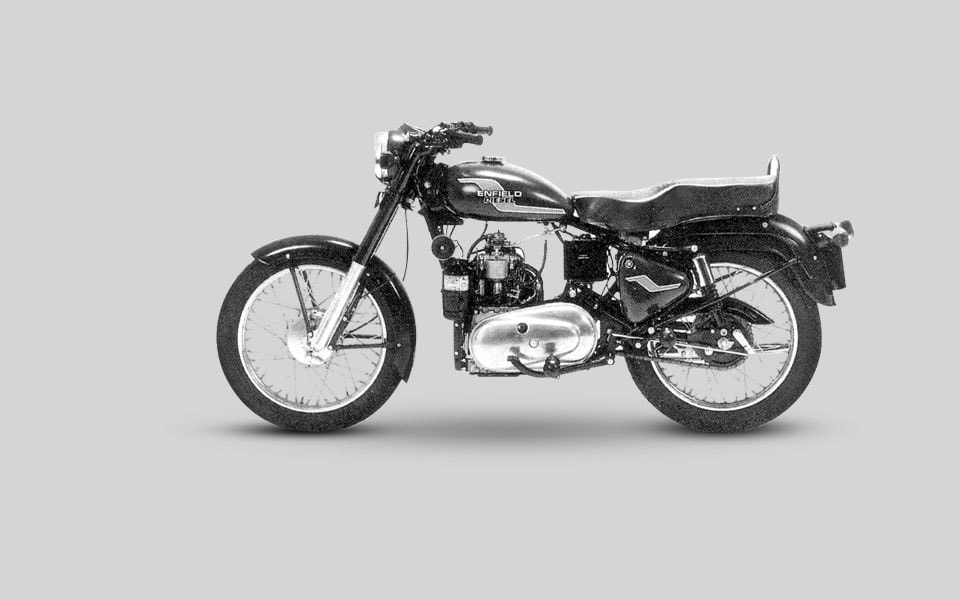
Royal Enfield India produces the world's first and only mass-manufactured diesel motorcycle. Known as the Enfield Diesel, it uses a highly fuel efficient 325cc, 6hp, power unit installed in the standard Bullet rolling chassis. An heavy load carrying version designed to meet the needs of India’s flourishing agricultural sector, known as the Taurus, follows.
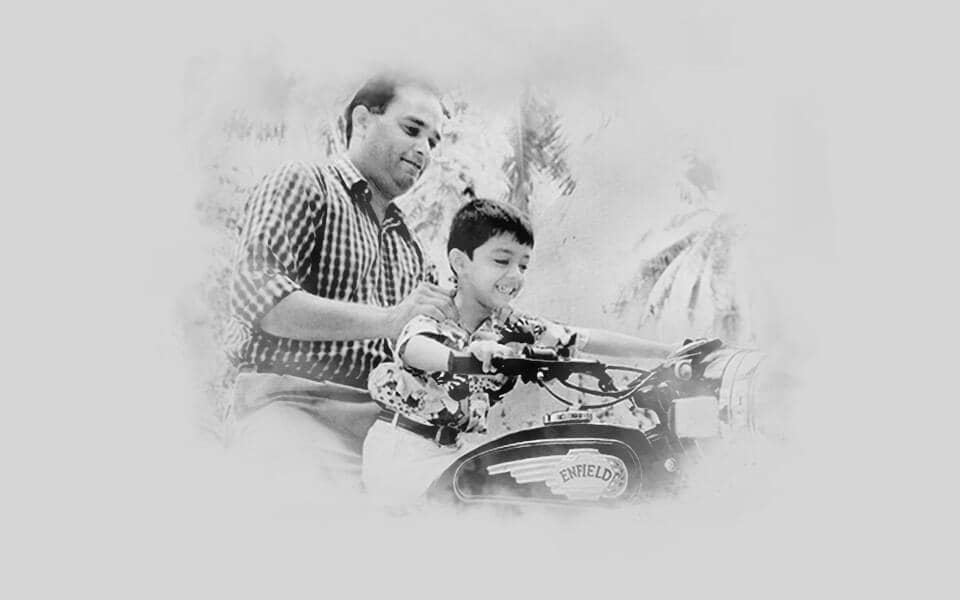
Commercial vehicle and tractor manufacturer, The Eicher Group, acquires Enfield India Limited. Eicher has roots in India dating back to 1948. It renames the company Royal Enfield Motors Limited. The production of lightweight motorcycles ceases as the brand decides to focus exclusively on the mid-size motorcycle segment.
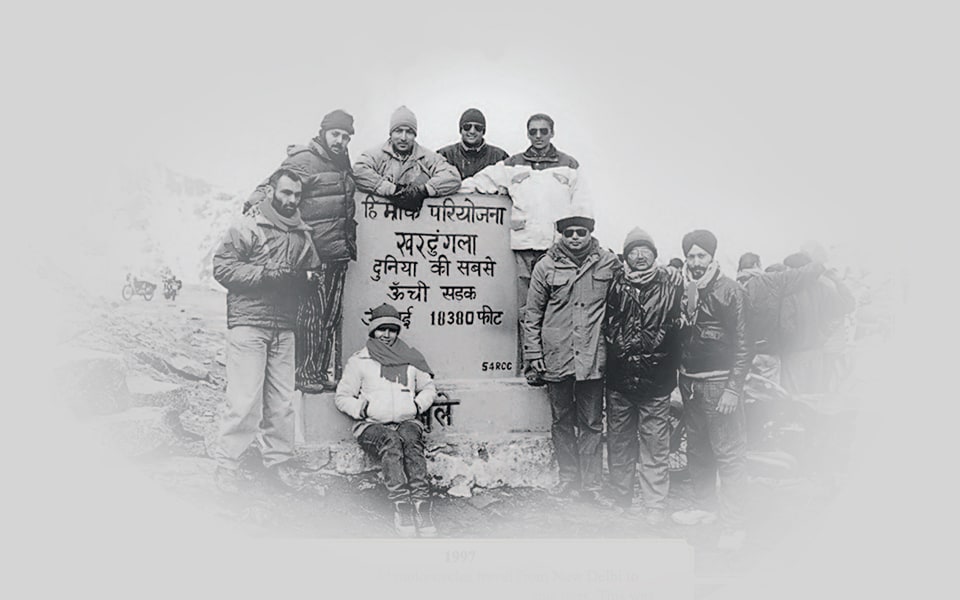
Forty Royal Enfield Bullet Club motorcycles climb to Khardung La, Ladakh, the world’s highest motorable pass. The ride sets a precedent for epic rides across some of the world’s most difficult terrain and creates a blueprint for the annual Himalayan Odyssey ride.
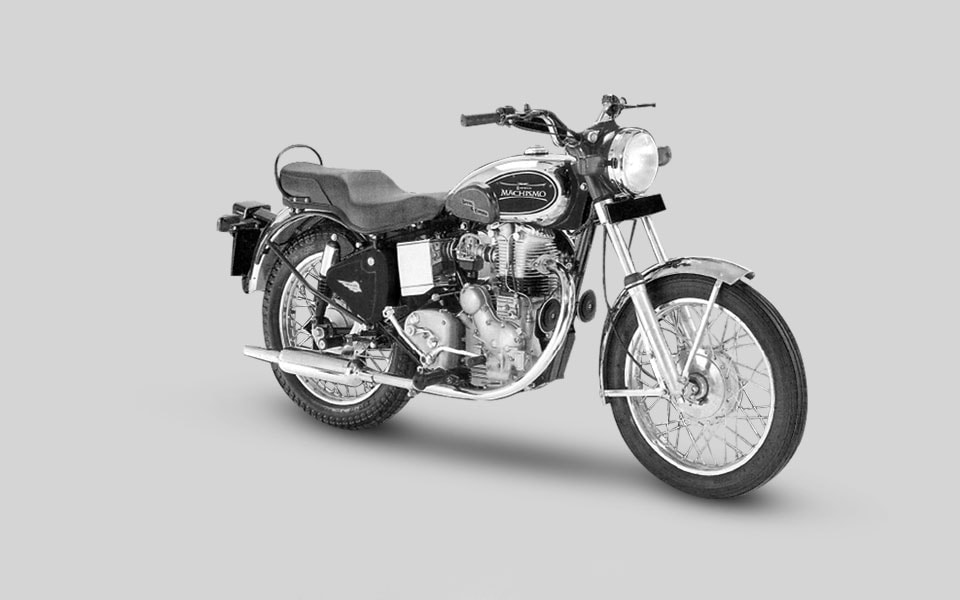
Utilising the design skills of Austrian company AVL, production of a revised 350cc all-aluminum lean-burn Bullet engine, known as the A350, begins at a new Royal Enfield plant near Jaipur, Rajasthan.
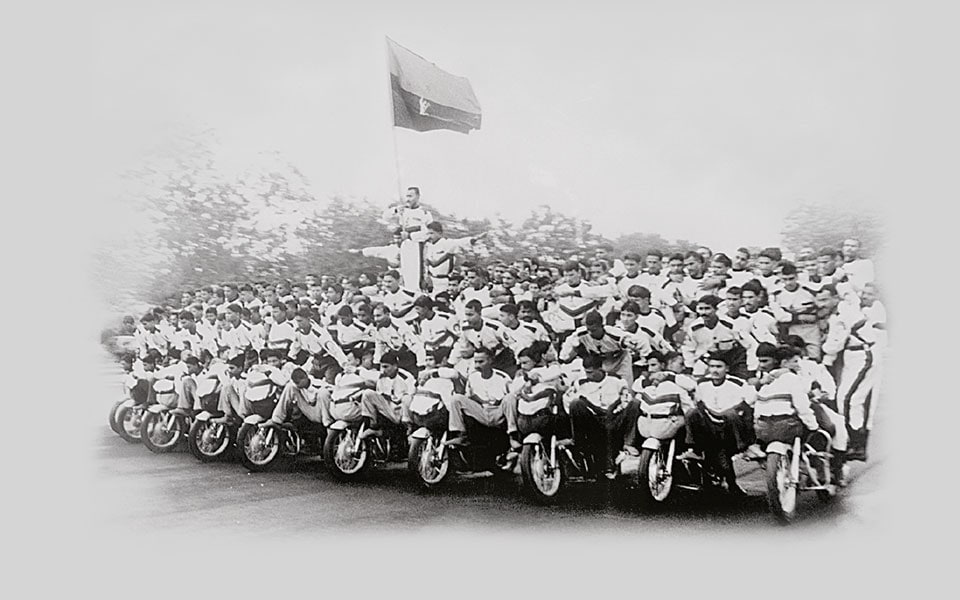
The Daredevils, the motorcycle display team of the Indian Army Corps of Signals, Jabalpur, forms a human pyramid of 201 men on ten 350cc Bullets. They ride a distance of more than 200 metres to set a new world record.
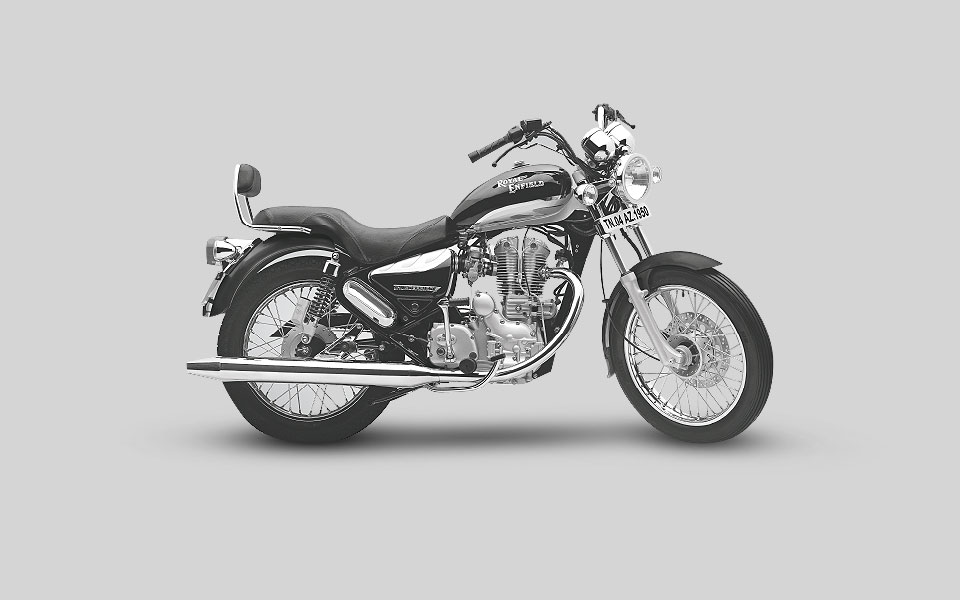
The Thunderbird, a stylish lean burn cruiser, is launched. It features the first 5-speed gearbox used on a Royal Enfield since the 1960s. More than a 1000 Royal Enfield motorcycles of all ages descend on Redditch for the Royal Enfield Owner’s Club ‘Redditch Revisited’ event.
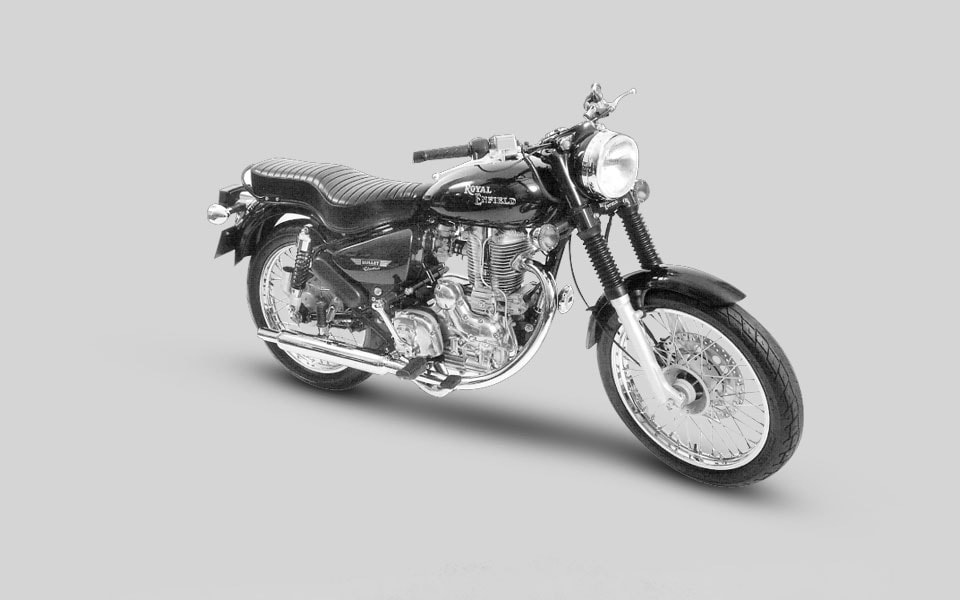
The Electra X, an export Bullet with a 500cc version of the all-alloy lean burn engine, goes on sale. The retro-styled ‘Bullet Machismo’ is rated the ‘No.1 Cruiser’ in a TNS Autocar survey.
Royal Enfield celebrates its 50th anniversary in India with the release of commemorative Thunderbird and Bullet Electra models and ‘The Legend Rides On’ coffee table book.
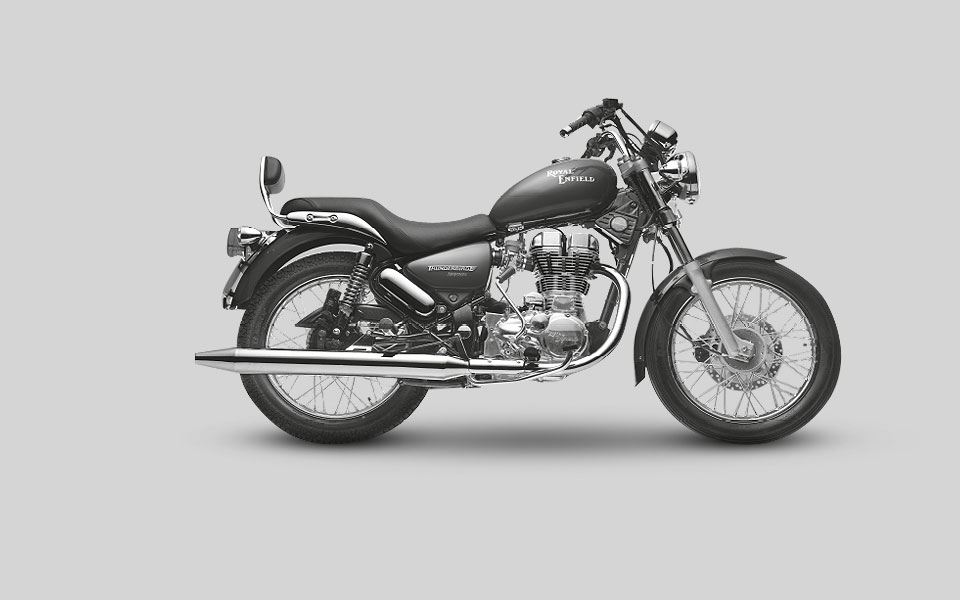
The Thunderbird Twinspark is launched in India with the new Unit Construction Engine (UCE). Royal Enfield begins exporting the Classic 500, India’s first EFI, Euro III-compliant motorcycle, to European markets.
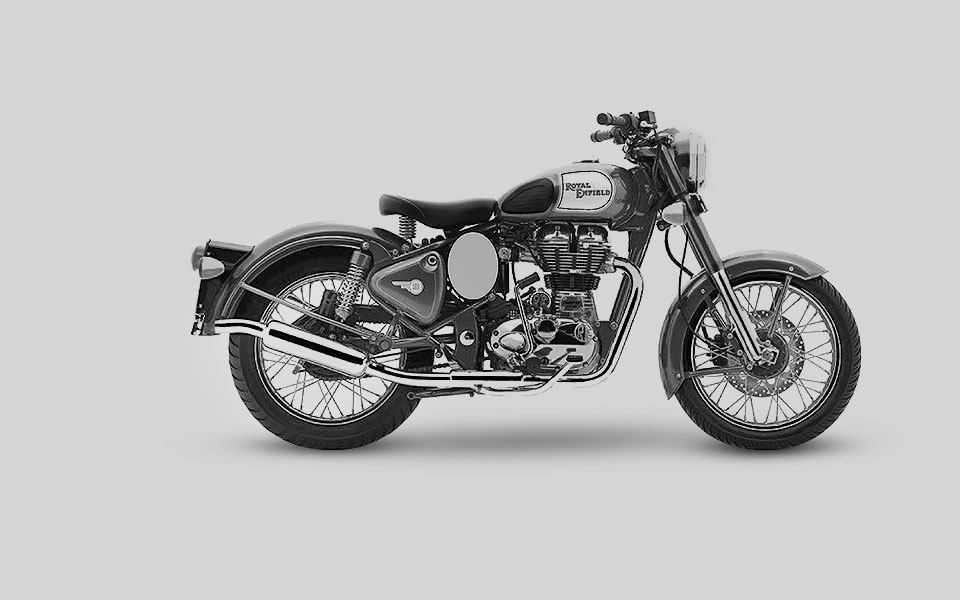
The retro-styled Classic, built on both the 350 and 500cc UCE platforms, goes on sale in India. It immediately achieves cult status and sales grow rapidly.
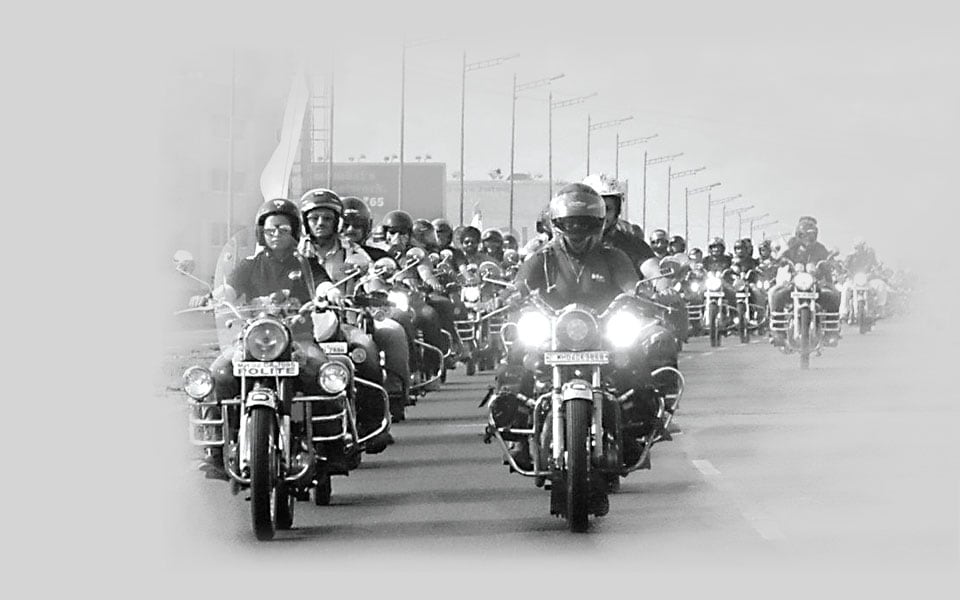
Royal Enfield riders around the world are encouraged to go for a ride on the inaugural ‘One Ride’. It becomes an annual ride. The company acquires 50 acres of land at Oragadam for its new factory. A Royal Enfield organised trip crosses the Nepalese border for the first time with ‘Tour of Nepal’.
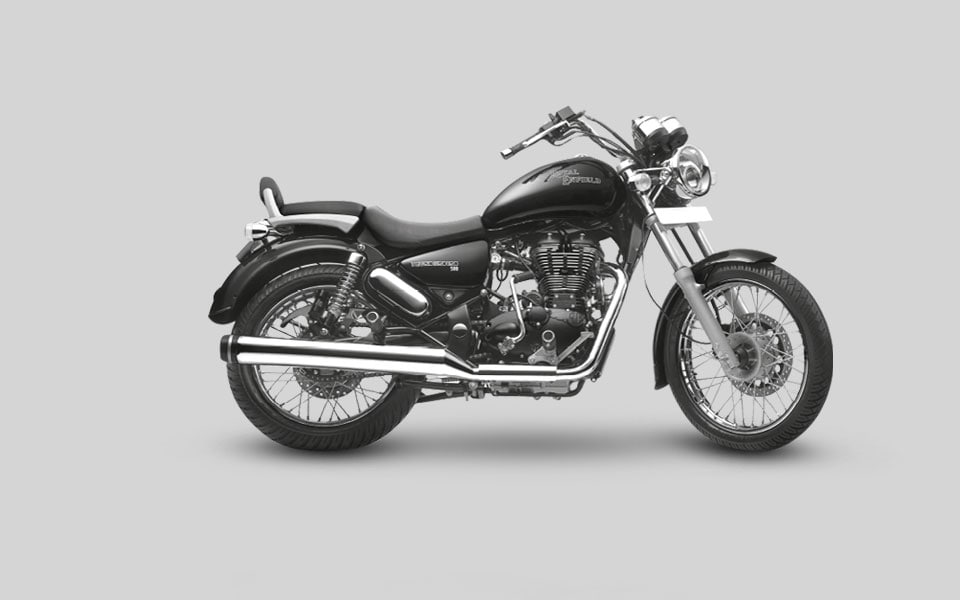
Royal Enfield launches its first highway cruiser, the all-black Thunderbird 500. Work on the new Oragadam factory continues briskly while the Tiruvottiyur plant sets a new production record to meet 113,000 motorcycle sales.
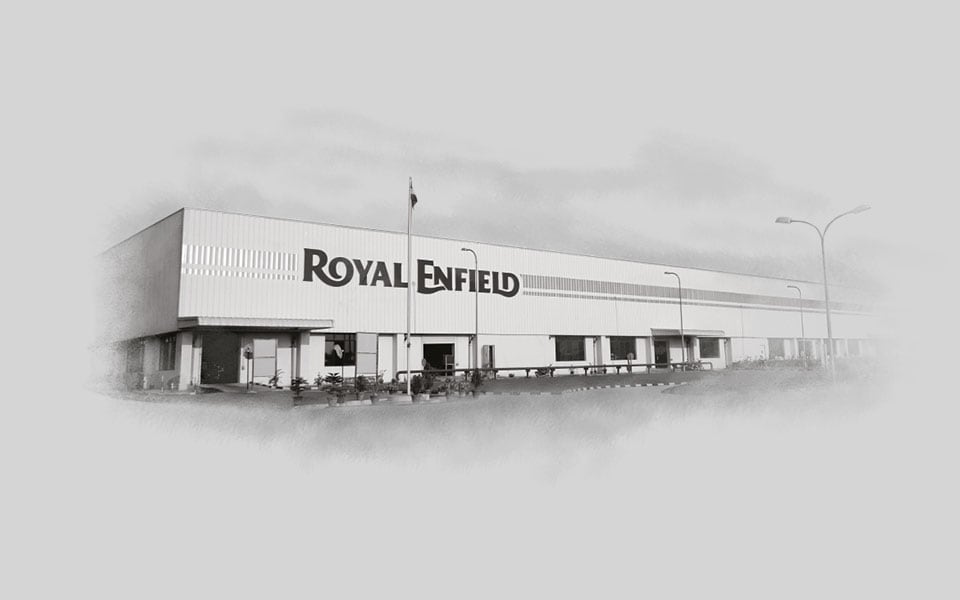
Manufacturing commences at Oragadam, Tamil Nadu. A Classic 500 Desert Storm is the first motorcycle off the assembly line. This state-of-art factory, which includes a robotic paint facility, is the nucleus of Royal Enfield’s future global ambitions.
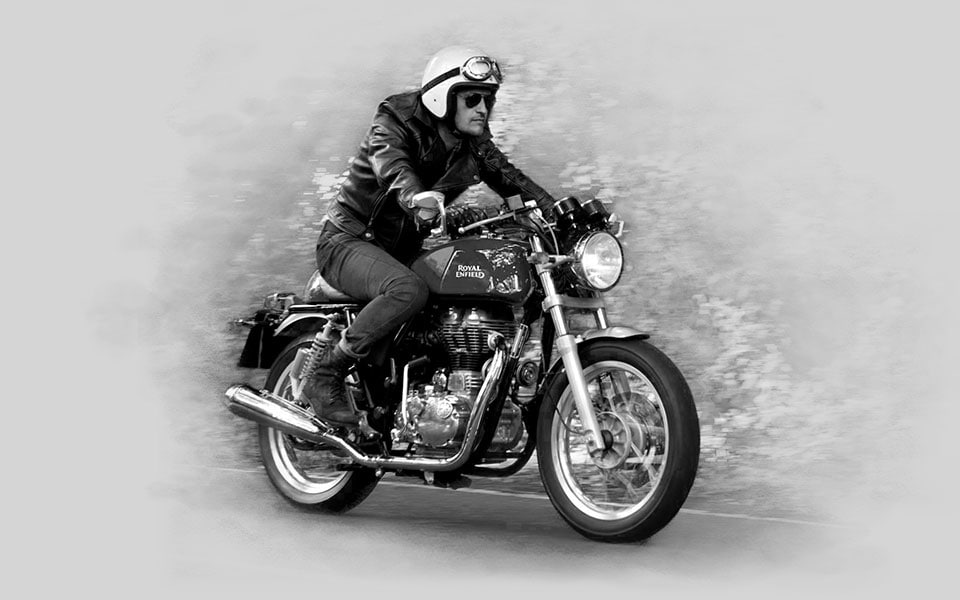
Forty-eight years after developing its first production café racer, Royal Enfield rolls out the all-new Continental GT. Featuring a cradle frame designed by Harris Performance and a 535cc UCE engine, this new café racer is well received internationally and introduces café racers to India for the first time.
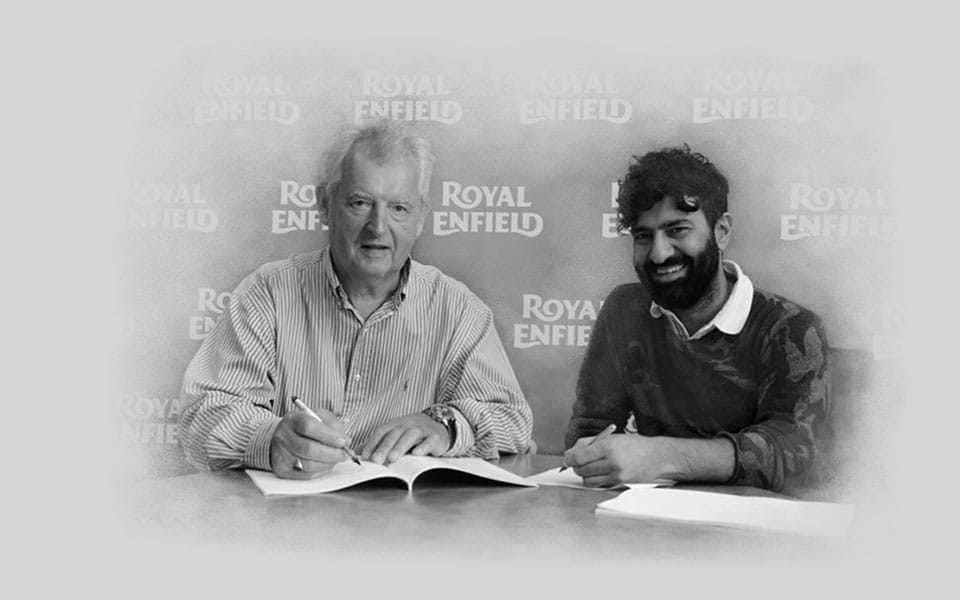
Harris Performance, a renowned British motorcycle design and fabrication firm, is acquired to enhance Royal Enfield’s engineering and product design capabilities.
Royal Enfield North America is established. With headquarters in Milwaukee, Wisconsin, it’s the company’s first direct distribution subsidiary outside of India.
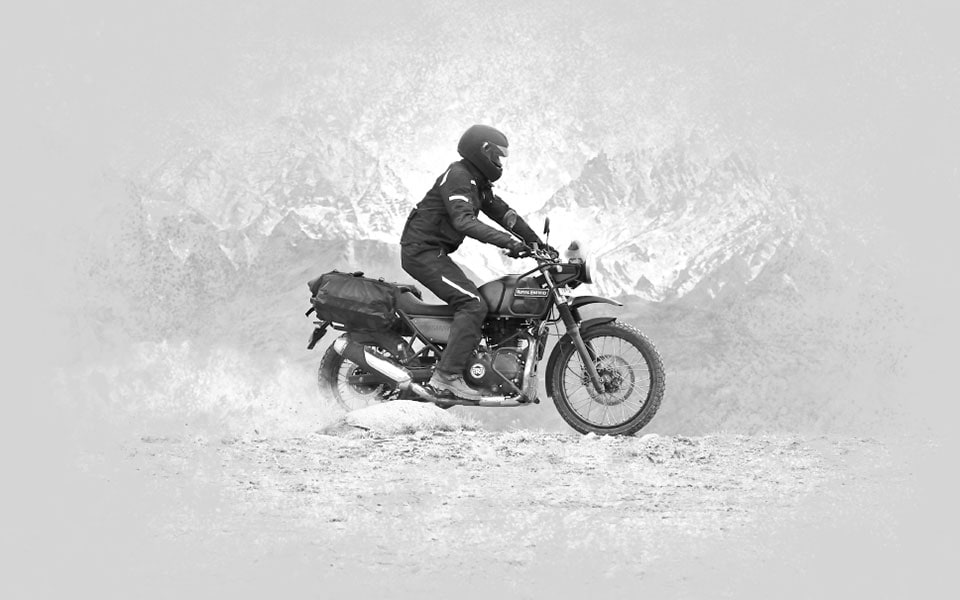
Royal Enfield debuts the Himalayan, its first purpose-built adventure motorcycle. With an all-new 411cc SOHC engine and long reach suspension, it’s designed to give adventurous riders the right tool for all roads and no roads.
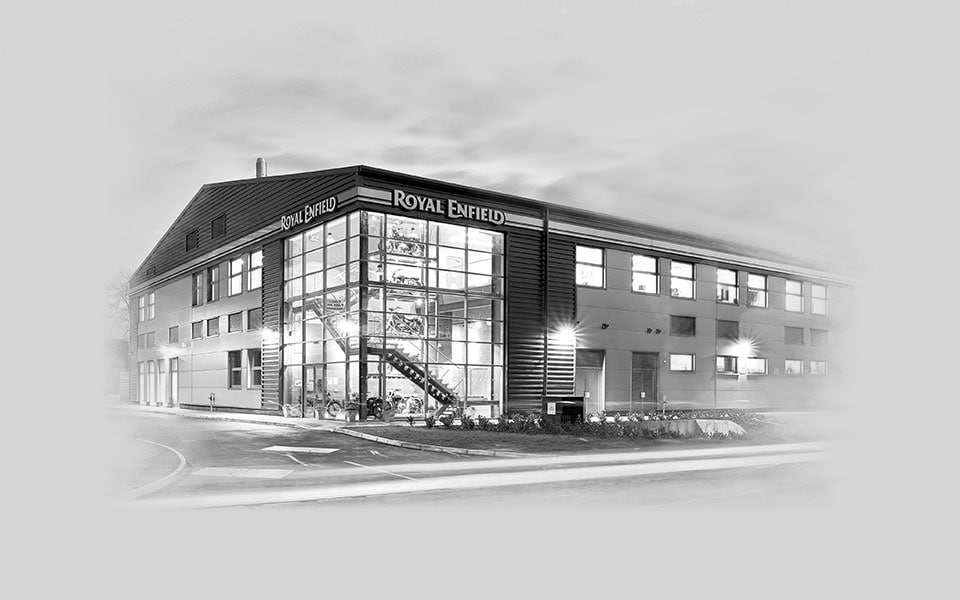
The Royal Enfield Technology Centre (UKTC) opens at Bruntingthorpe Proving Ground, near Leicester, in the UK. A team of over 170 engineers, designers and testers begin work on research, development and long-term product strategy.
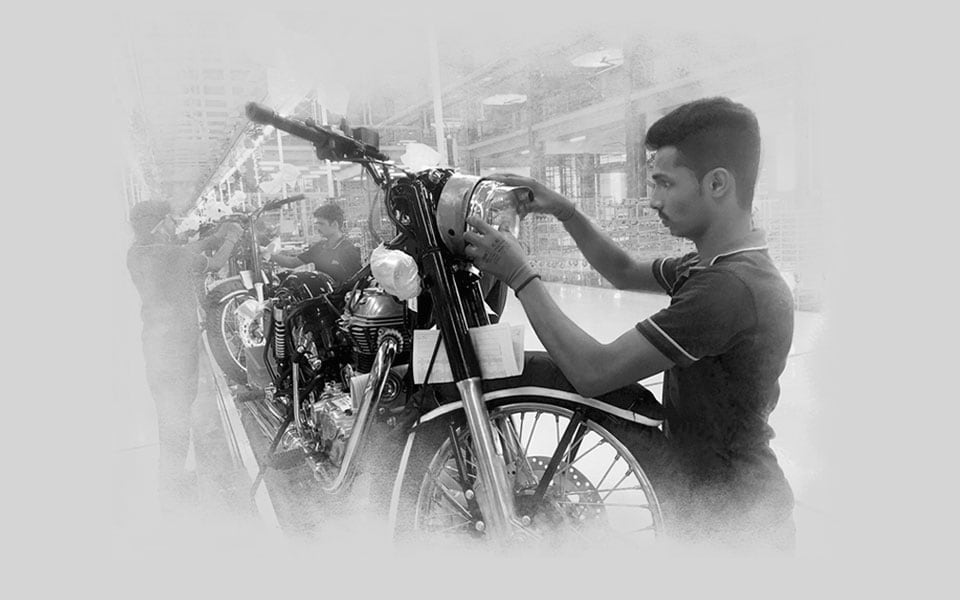
Production commences at the company’s third plant. Located at Vallam Vadagal, near Chennai, this world-class manufacturing facility is dedicated to producing Royal Enfield 350cc machines.
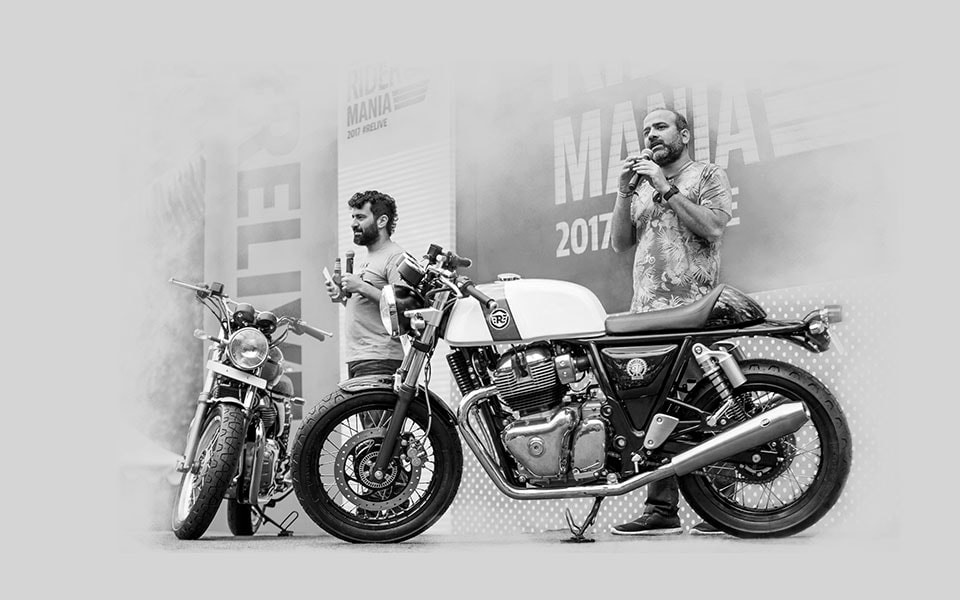
The new 650cc Royal Enfield INT and Continental GT twins are unveiled at the EICMA Motorcycle Show in Milan, Italy, and at Rider Mania in Goa, India. The company opens its first café, called the Royal Enfield Garage Café, in Baga, Goa.
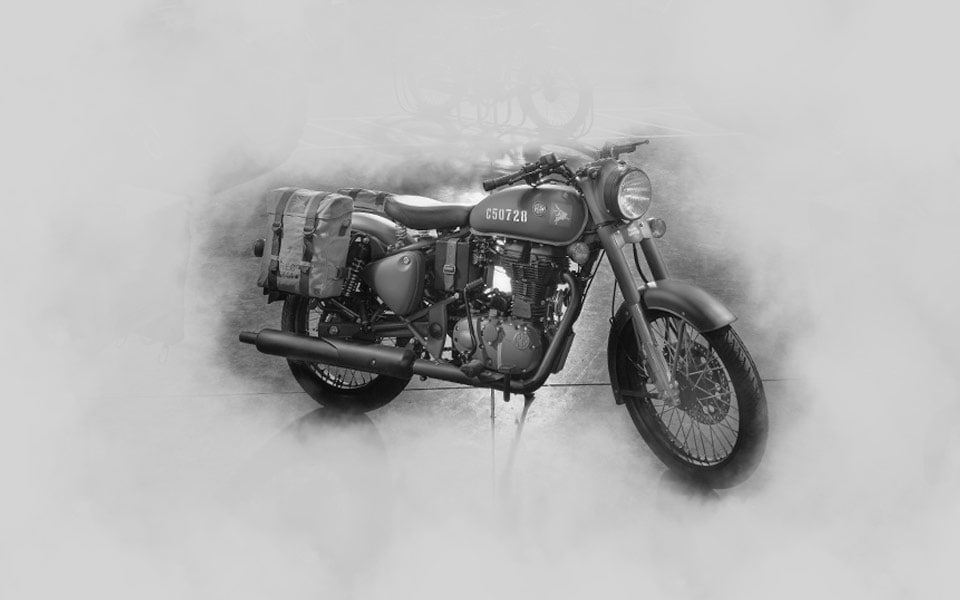
The Royal Enfield Classic 500 Pegasus, a homage to the WWII Royal Enfield Flying Flea, is launched at the Imperial War Museum, Duxford, UK. Limited to just 1000 individually numbered motorcycles worldwide, the Indian market allocation of 250 machines sells in under 3 minutes.
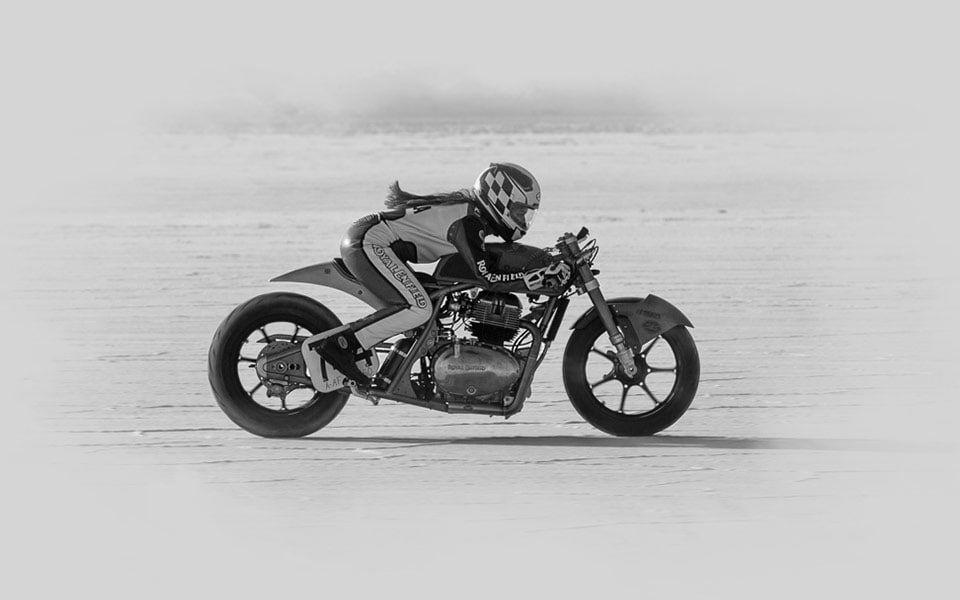
Cayla Riva, an 18-year-old racer from California, sets a new land speed record of 157.053 mph during Speed Week at the Bonneville Salts Flats. Her bike, a Continental GT 650 twin, is specially prepared for Bonneville with S&S Cycle engine tuning.and a Harris Performance frame.
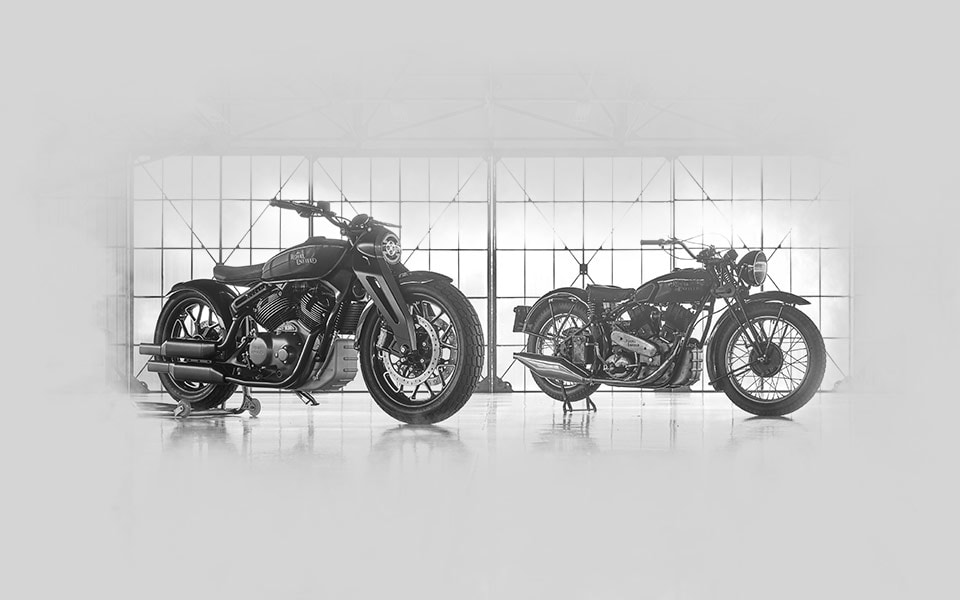
With design cues taken from the 1140cc KX V-twins of the late 1930’s, the 838cc KX Concept V-twin demonstrates the capabilities of the design team at the UK Technology Centre. Featuring girder forks with an integrated headlight and a single-sided softtail rear, it is the star of the show when unveiled at EICMA.
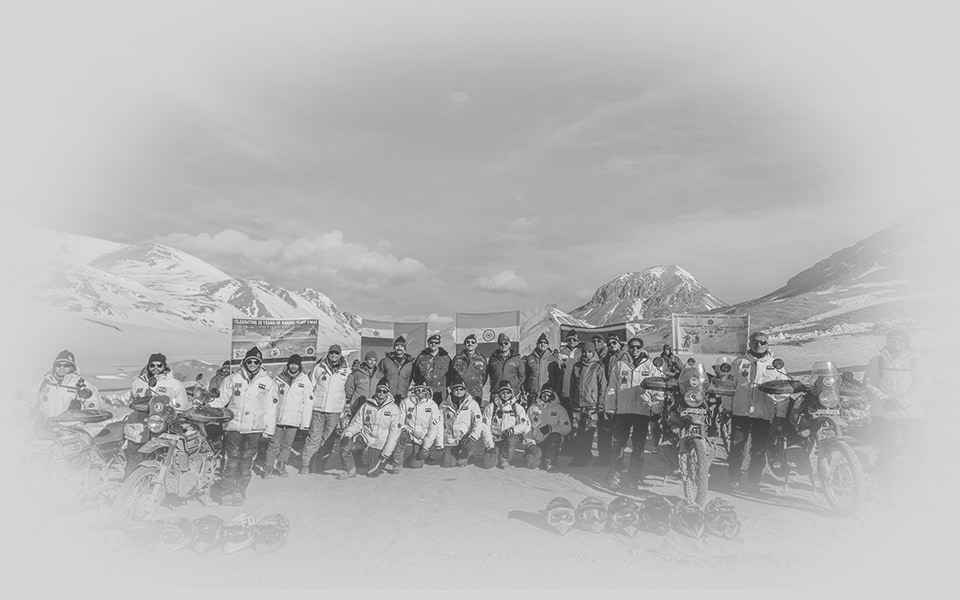
A team of eleven Indian Army and Royal Enfield riders summit the 5,540m Karakoram Pass on Himalayans despite treacherous snow, ice and temperatures below -30°. It is the first time the pass has been reached by motorcycle. The Bullet Trials Works Replica 500 is launched as an homage to Johnny Brittain’s all-conquering trials mounts of the 1950s.
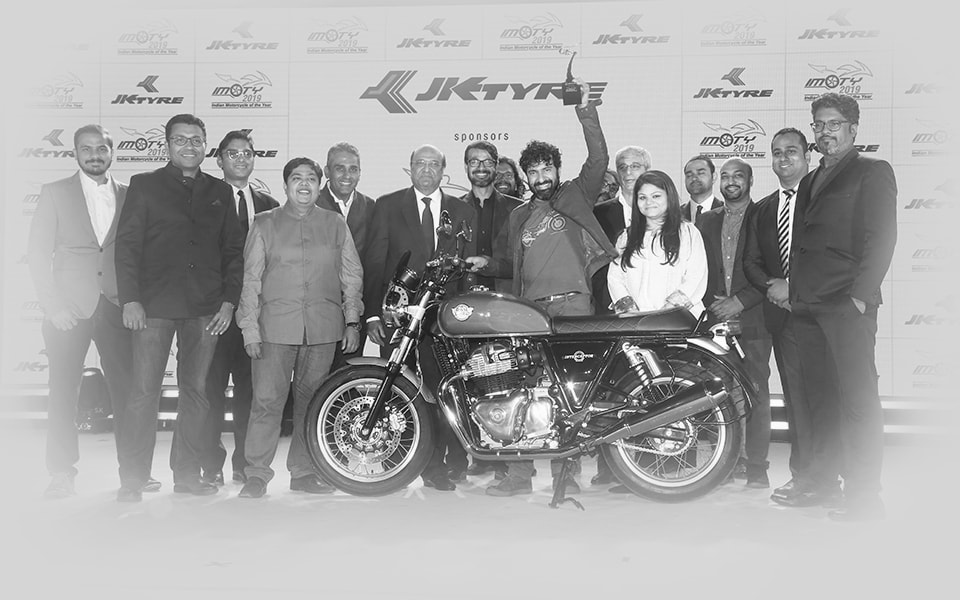
The INT 650 wins the prestigious Indian Motorcycle of the Year award, named Bike of the Year in the Times Auto Awards, Motorcycle of the Year by Autocar and Two Wheeler of the Year by Bike India. It is voted Best Modern Classic Middleweight in Thailand and Best Retro Bike of the Year by MCN in the UK.
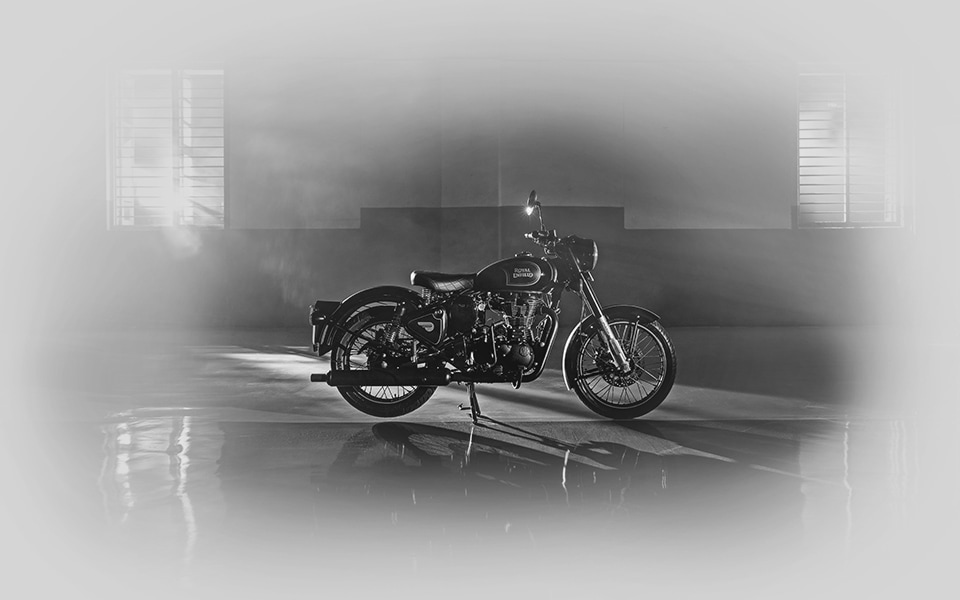
Production of the 500cc UCE engine comes to an end. Its swansong is the limited edition Classic 500 Tribute Black.
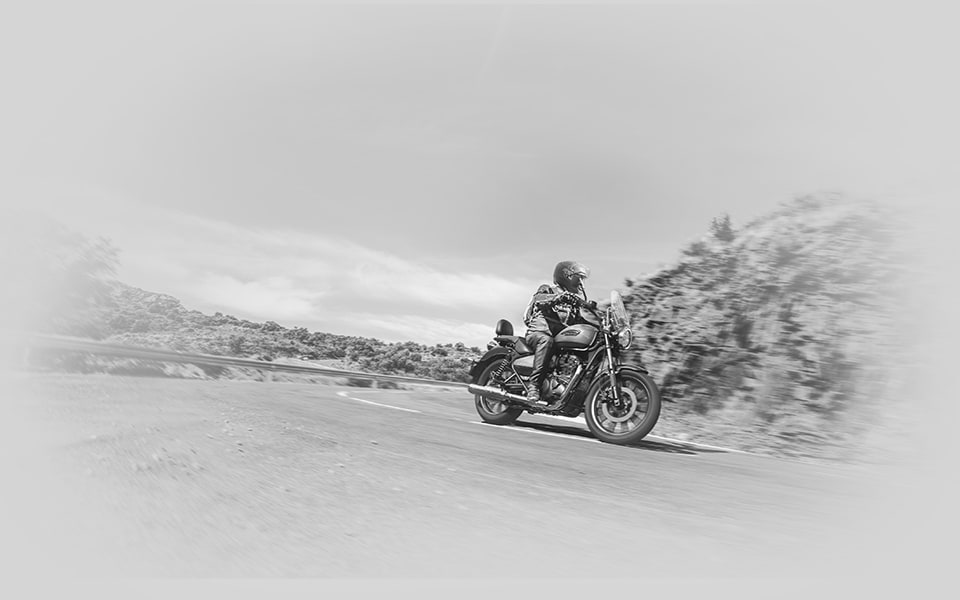
Royal Enfield’s groundbreaking new cruiser, the Meteor 350, is launched. Designed and developed as a collaboration between the new Chennai and UK Technology Centres, the Meteor is the first model on the new J platform, Royal Enfield’s next generation 350cc engine. An authentic cruiser with a high level of refinement, it wins many awards including 2021 Indian Motorcycle Of The Year.
Royal Enfield celebrates 120 years of Pure Motorcycling. Project Origin, the faithful working replica of the very first 1901 Royal Enfield, is built by volunteers from the Royal Enfield UK Technology Centre and Harris Performance with the assistance of experts from the world of pioneer motorcycling.
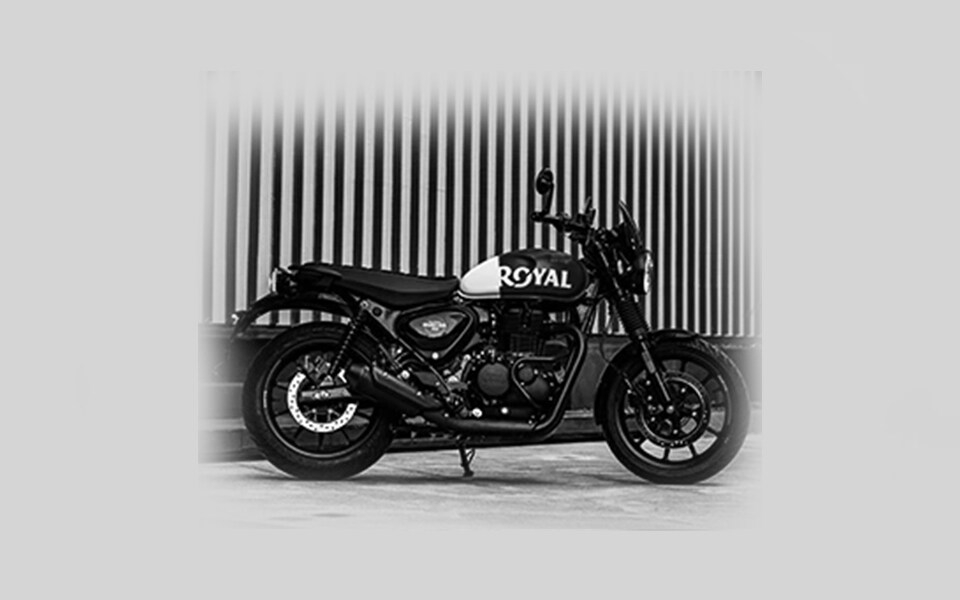
The Hunter 350, the newest Royal Enfield, is introduced to the world with a launch event in Bangkok, Thailand. Designed with a shorter wheelbase, lighter weight and tighter geometry, it's a motorcycle that can effortlessly maneuver through the world’s coolest neighbourhoods, from Bandra to Brooklyn.
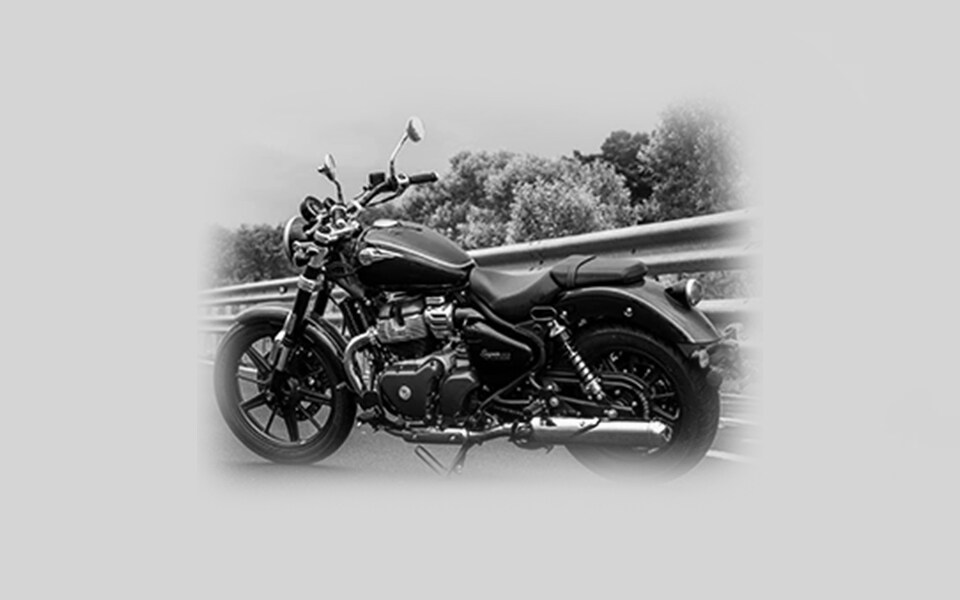
The launch of the Super Meteor 650, a quintessential cruiser that recaptures the joy of riding down the open highway and the city streets. This cruiser instantly gains popularity and becomes a community favourite.
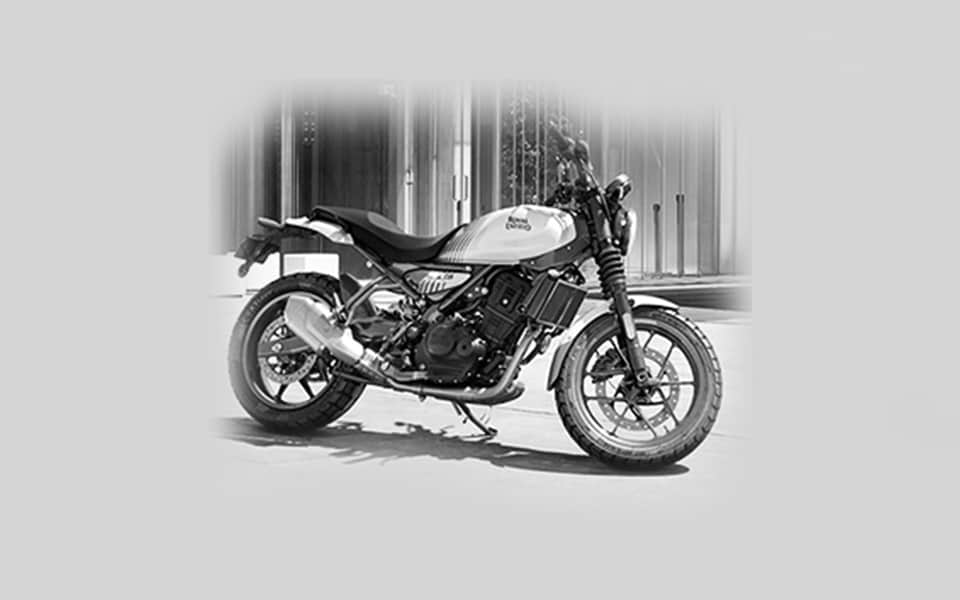
Royal Enfield launches the Guerrilla 450 in Barcelona, Spain to take on the performance roadster segment. A motorcycle designed for questioning the status quo and bringing the Sherpa 450’s performance on a platform that is designed to make hearts race and heads turn.